
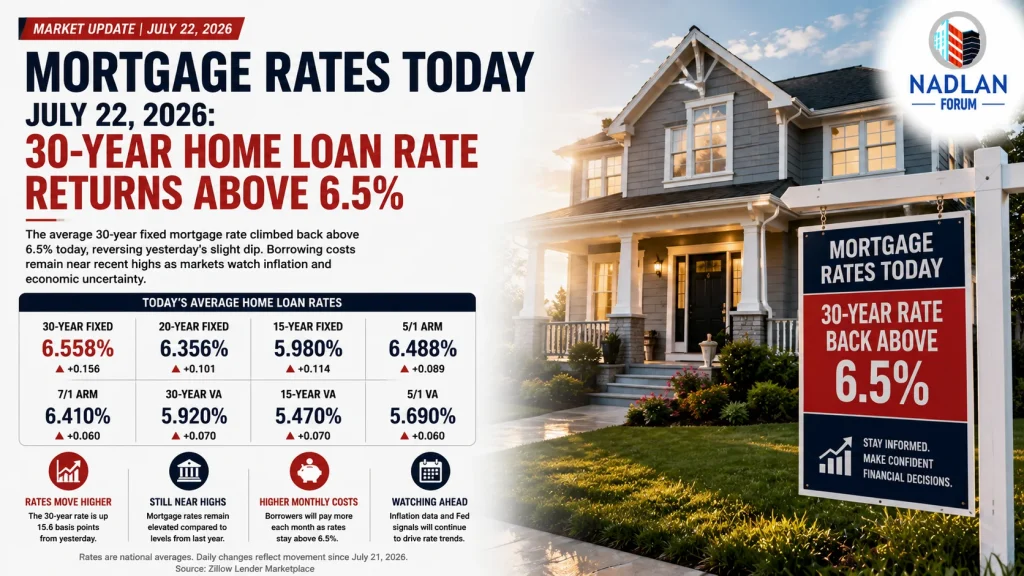
Mortgage Rates Fall Slightly Today: 30-Year Fixed Now at 6.36%


Mortgage rates have taken a slight dip today, with the 30-year fixed rate dropping 11 basis points to 6.36%, making it more affordable for potential homebuyers. This decrease follows a steady month-long downturn in bond yields, helping to lower mortgage rates slightly. With the housing market showing some fluctuation, this slight rate reduction provides a valuable opportunity for buyers who have been waiting for more favorable conditions.
Current Mortgage Rates for March 31, 2026
According to the latest data from Zillow, the current mortgage rates are as follows:
- 30-Year Fixed: 6.36%
- 20-Year Fixed: 6.32%
- 15-Year Fixed: 5.81%
- 5/1 ARM: 6.27%
- 7/1 ARM: 6.20%
- 30-Year VA: 5.89%
- 15-Year VA: 5.47%
- 5/1 VA: 5.41%
These figures reflect national averages, though it’s important to note that rates can vary depending on the specific state or region you’re buying in.
Today’s Mortgage Refinance Rates
If you’re looking to refinance, here are today’s rates for refinancing:
- 30-Year Fixed: 6.43%
- 20-Year Fixed: 6.42%
- 15-Year Fixed: 5.93%
- 5/1 ARM: 6.34%
- 7/1 ARM: 6.60%
- 30-Year VA: 5.82%
- 15-Year VA: 5.57%
- 5/1 VA: 5.44%
As always, refinancing rates are often slightly higher than purchase mortgage rates, but this isn’t always the case. It’s essential to shop around for the best deals based on your needs.
How Current Mortgage Rates Compare
The current 30-year fixed mortgage rate is 6.36%. When compared to the previous rate of 6.47% earlier this year, it is a noticeable decline, giving potential homeowners an opportunity to lock in a favorable rate. This dip comes as bond yields have softened, offering more stability in mortgage pricing. The 15-year fixed mortgage rate has also decreased slightly to 5.81%, providing an excellent option for those looking to pay off their mortgage in half the time.
Fixed vs. Adjustable Mortgage Rates: What’s Right for You?
A fixed-rate mortgage offers stability, as your rate will remain the same for the entire length of the loan. The main advantage here is predictability your monthly payments will not change due to market fluctuations. However, a fixed-rate mortgage may come with a slightly higher initial rate compared to adjustable-rate mortgages (ARMs).
Adjustable-rate mortgages (ARMs) usually start with lower rates, such as the 5/1 ARM (which stays fixed for the first five years and then adjusts annually), or the 7/1 ARM (which stays fixed for the first seven years). ARMs can be appealing if you plan to move or refinance before the rate starts adjusting. However, after the introductory period, your rate could increase, potentially leading to higher payments in the future.
How to Get the Best Mortgage Rate
To secure the best mortgage rate, consider taking the following steps:
- Improve Your Credit Score: The better your credit score, the lower your mortgage rate will likely be. Before applying for a loan, check your credit report and work on improving any issues.
- Increase Your Down Payment: The more you can put down upfront, the less risk lenders perceive in offering you a loan, which could result in a lower rate.
- Shop Around: Mortgage rates vary by lender, so it’s essential to compare rates and terms to find the best deal. Don’t settle for the first offer you receive.
- Consider Your Loan Term: Shorter loan terms typically come with lower interest rates. If you can afford the higher monthly payments, consider opting for a 15-year fixed-rate mortgage to save on interest over the life of the loan.
30-Year Fixed vs. 15-Year Fixed Mortgage: Which One Is Right for You?
Both 30-year fixed mortgages and 15-year fixed mortgages come with their own set of advantages and disadvantages.
- 30-Year Fixed Mortgage: This option offers lower monthly payments because you spread the loan over 30 years. However, you’ll pay more interest over the life of the loan. For example, with a $300,000 loan at 6.36%, your monthly payments will be around $2,492, and you will pay $496,960 in interest over the 30 years.
- 15-Year Fixed Mortgage: A 15-year mortgage offers a lower interest rate (currently 5.81%) and allows you to pay off the loan faster, saving on interest in the long term. However, your monthly payments will be higher. For the same $300,000 loan, your monthly payment would jump to $3,335, but you’ll only pay $200,211 in interest over the life of the loan.
Choosing between these two options depends on your financial situation. If you can afford higher monthly payments, a 15-year mortgage can save you thousands in interest.
Mortgage Rates Today: FAQs
What is the current average mortgage rate for a 30-year fixed mortgage?
As of today, the national average for a 30-year fixed mortgage is 6.36%, according to Zillow. Rates can differ depending on the region and your personal financial situation.
Will mortgage rates continue to fall in 2026?
Experts predict that mortgage rates will remain relatively stable in 2026, with the 30-year fixed rate staying near 6.30% through the year. Fannie Mae forecasts a slightly lower rate of just under 6% by the year’s end.
What should I do to get the lowest refinance rate?
To secure the lowest refinance rate, aim to improve your credit score, reduce your debt-to-income ratio, and consider refinancing into a shorter loan term, which typically offers lower rates.
In conclusion, mortgage rates have eased slightly today, providing potential homeowners and refinancers with a small but welcome opportunity to lock in lower rates. With rates fluctuating, it’s important to remain proactive in your home-buying or refinancing journey, ensuring you’re getting the best possible deal for your financial situation. For direct financing consultations or mortgage options for you visit 👉 Nadlan Capital Group.











Responses