
Wholesale Prices March 2026: Inflation Slows Despite Energy Pressure

Producer Prices Rise Less Than Expected
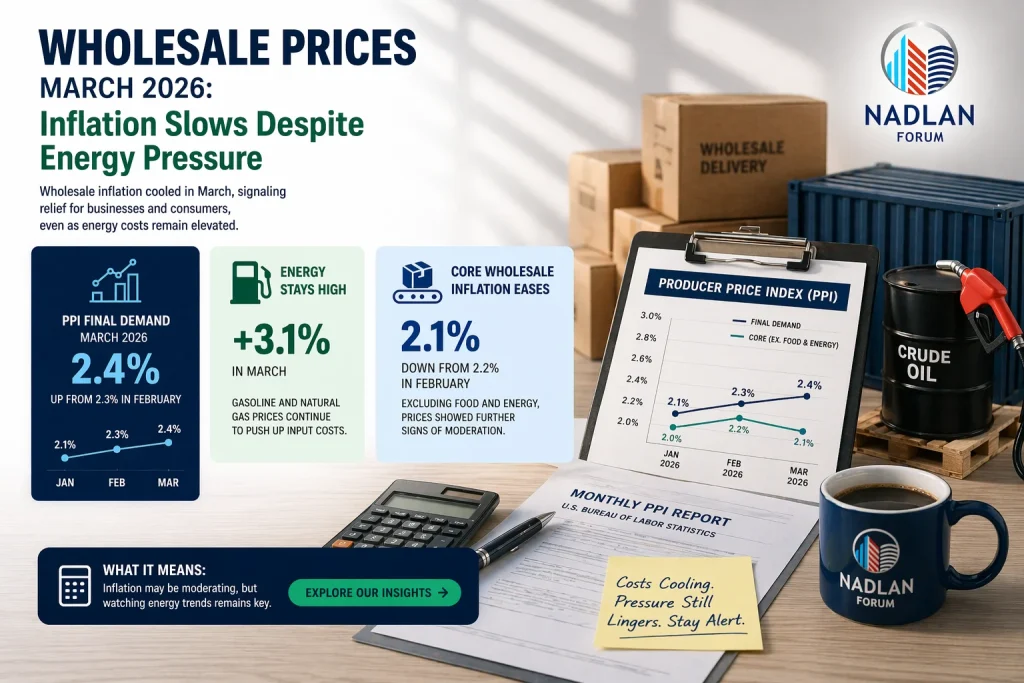
Wholesale inflation showed a softer trend in March, offering some relief despite ongoing global tensions. The latest report from the Bureau of Labor Statistics revealed that the Producer Price Index (PPI) increased by 0.5% for the month.
This reading came in well below market expectations of 1.1%, suggesting that inflation at the producer level is not accelerating as quickly as feared. The PPI tracks the prices businesses receive for goods and services and is often seen as an early signal of future consumer inflation.
Core Inflation Remains Controlled
When excluding volatile categories like food and energy, the data becomes even more encouraging. Core PPI rose just 0.1% in March, far below the projected 0.5%.
This indicates that underlying inflation pressures remain relatively stable. Even more notable, service-related costs—which are closely watched by policymakers were flat for the month.
This trend suggests that while external factors like energy prices are creating temporary spikes, the broader inflation picture is still under control.
Annual Inflation Still Elevated
Despite the softer monthly increase, year-over-year data shows that inflation remains above comfortable levels.
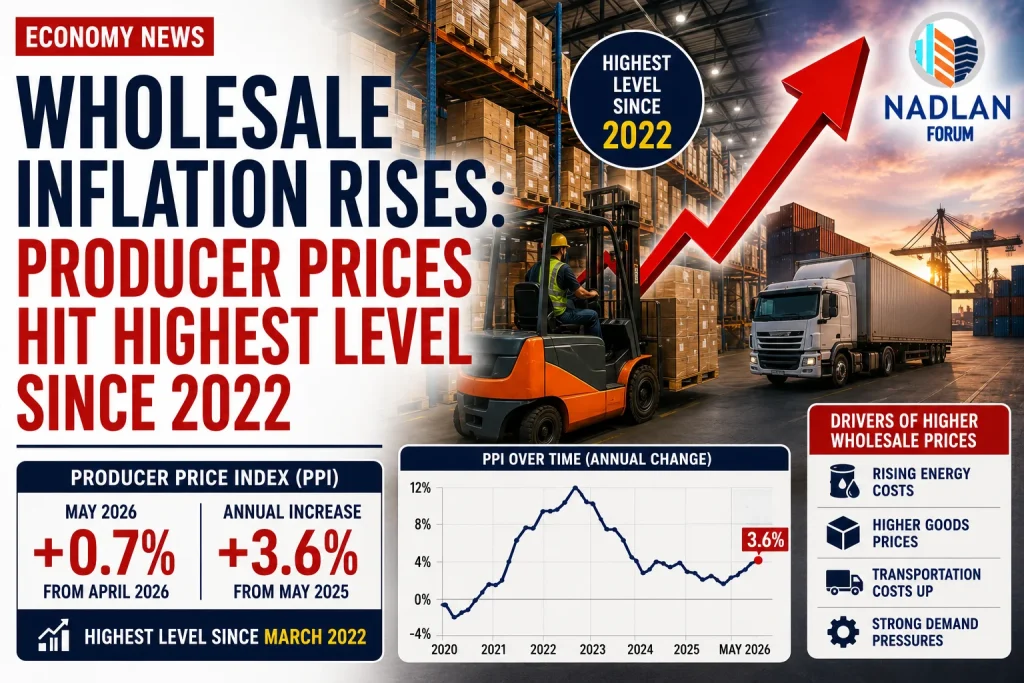
- Headline PPI: up 4% annually (highest since early 2023)
- Core PPI: up 3.8% annually
- PPI excluding food, energy, and trade: up 3.6% annually
These figures highlight that inflation has not fully returned to target levels, even if short-term data is improving.
Energy Prices Drive Most of the Increase
Energy costs were the main reason for the rise in wholesale prices.
- Gasoline prices jumped 15.7%
- Diesel surged by 42%
- Jet fuel climbed 30.7%
Overall, goods prices increased by 1.6%, largely due to these energy spikes. These increases are tied to the recent geopolitical tensions involving Iran, which disrupted global energy markets earlier in the month.
However, services costs remained flat, helping offset the overall inflation impact. This balance is important because services inflation tends to be more persistent than energy-driven price changes.
Businesses Absorbing Some Costs
Another key detail in the report is that trade services declined by 0.3% during the month. This suggests that businesses may be absorbing some of the increased costs rather than passing them on to consumers immediately.
If this trend continues, it could help slow the pace of consumer inflation in the coming months.
Comparison With Consumer Inflation
The wholesale price increase was notably smaller than the rise in consumer prices reported earlier. Consumer inflation climbed 0.9% in March, meaning businesses are not fully passing higher costs down the supply chain.
This gap between producer and consumer inflation may indicate:
- Temporary cost pressures
- Delayed price adjustments
- Competitive pricing keeping retail prices in check
What This Means for the Fed
The latest data is unlikely to push the Federal Reserve toward immediate action.
While inflation remains above the central bank’s 2% target, the softer PPI reading supports a cautious approach. Economists expect policymakers to:
- Hold interest rates steady in the near term
- Monitor inflation trends over the next few months
- Focus on core inflation rather than short-term energy spikes
Some forecasts suggest that the Fed’s preferred inflation measure could come in around 3.1% for headline and 3.5% for core in March—still elevated but not worsening rapidly.
Market Reaction and Outlook
Financial markets showed little reaction to the report, with stock futures slightly higher and bond yields mostly unchanged. This reflects a sense that the data was in line with broader expectations of a slowing, but not fully controlled, inflation environment.
Looking ahead, much will depend on whether energy prices continue to stabilize following the recent ceasefire developments. Oil prices have already eased somewhat, which could help reduce inflation pressure in future reports.
Final Takeaway
The March wholesale inflation report delivers a mixed message. On one hand, price increases were lower than expected, signaling that inflation may not be accelerating. On the other, annual inflation remains above target, and energy costs continue to create uncertainty.
For now, the data supports a wait-and-see approach from policymakers, while giving businesses and consumers a bit of breathing room as inflation pressures show early signs of easing. For direct financing consultations or mortgage options for you visit 👉 Nadlan Capital Group.

















Responses