
Housing Affordability Bill Advances: Investors Win Key Changes in House Deal


The U.S. House of Representatives is preparing to vote on a major housing affordability bill that could reshape how institutional investors participate in the single-family housing market.
The bipartisan legislation aims to address growing concerns about housing affordability while also protecting new housing construction activity across the country.
Lawmakers reached a revised agreement after weeks of negotiations between House and Senate leaders, housing industry groups, and the White House.
The latest version of the bill keeps limits on large investors purchasing additional single-family homes but removes some of the stricter rules that builders and rental housing companies strongly opposed.
What the Housing Bill Would Do
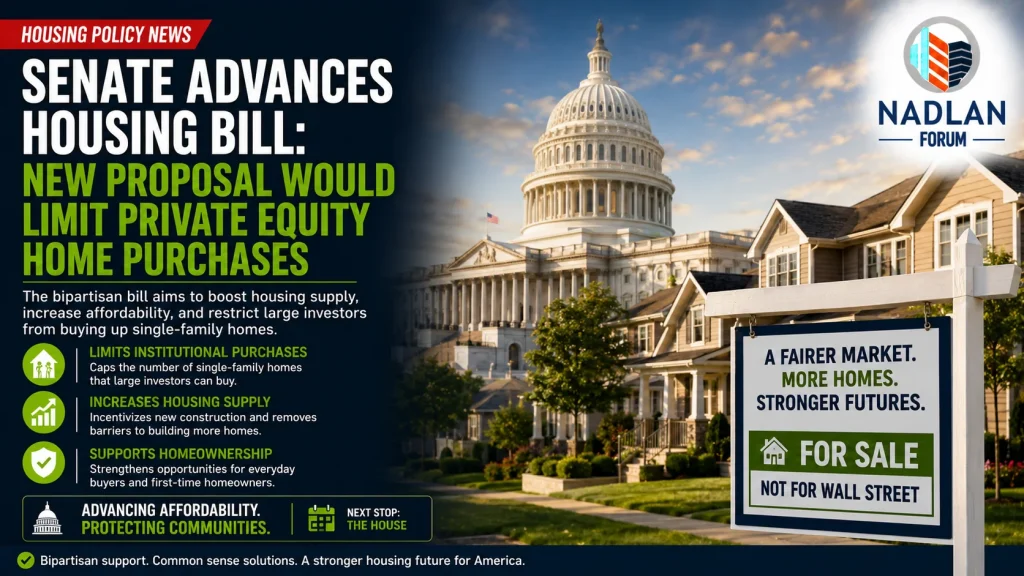
Under the proposed legislation, institutional investors that already own more than 350 single-family homes would face restrictions on buying additional existing homes.
However, the revised House version would still allow those investors to continue building new homes and rental communities.
This became one of the biggest changes from the earlier Senate proposal.
The Senate version included a rule requiring large investors to sell newly built rental homes within seven years. Industry groups argued that the requirement would discourage new construction and reduce housing supply at a time when the country already faces a major shortage of homes.
The updated House agreement removes that forced-sale requirement.
Why the Bill Was Revised
The original Senate proposal created major opposition from builders, rental housing operators, and Wall Street-backed investment firms.
Industry groups warned lawmakers that strict limits on build-to-rent housing could slow construction activity and reduce the number of new homes entering the market.
Supporters of the revised bill argued that allowing investors to continue building homes could help expand overall housing supply while still preventing large corporations from aggressively buying existing homes already available to families.
The White House reportedly supported the revised compromise after negotiations with both Democratic and Republican lawmakers.
Investor Activity Became a Political Issue
Institutional investors have become a major topic in the housing market over the past several years.
During the pandemic housing boom, many large firms increased purchases of single-family homes across fast-growing metro areas, especially in Sun Belt states.
Critics argue that institutional buyers:
- Increase competition for first-time buyers
- Push home prices higher
- Reduce available inventory
- Expand the rental market at the expense of homeownership
Supporters of institutional investment argue that large firms help provide rental housing, improve aging properties, and increase development activity in markets with strong population growth.
The debate has become increasingly political as affordability challenges continue affecting millions of households nationwide.
Lawmakers Split Over Build-to-Rent Housing
One of the largest disagreements involves build-to-rent communities.
These developments consist of newly constructed single-family homes designed specifically for long-term rentals rather than ownership.
Some lawmakers believe these projects reduce homeownership opportunities for younger buyers.
Others argue they provide important housing supply in markets where affordability remains strained.
Sen. Bernie Moreno of Ohio criticized the revised House bill, saying lawmakers weakened earlier protections intended to expand homeownership.
According to Moreno, encouraging build-to-rent growth could reduce opportunities for younger Americans trying to purchase homes and build long-term wealth.
He argued that single-family homes should primarily serve future homeowners rather than large rental operators.
Senate Approval Remains Uncertain
Although the bill is expected to pass the House with bipartisan support, its future in the Senate remains unclear.
Several senators continue supporting stronger restrictions on institutional investors.
Others previously opposed the Senate version because they believed forcing investors to sell build-to-rent properties would discourage new housing construction.
Because Senate rules require 60 votes to move most legislation forward, lawmakers may still need additional negotiations before the bill can reach President Donald Trump’s desk.
Senate leadership has not confirmed when another vote could take place.
Housing Supply Remains a Major Concern
The debate comes as the U.S. housing market continues facing long-term supply shortages.
Economists estimate the country remains millions of homes short of balanced inventory levels.
Low housing supply has remained one of the biggest drivers of rising home prices over the past several years.
Many housing experts believe increasing construction activity is necessary to improve affordability over time.
That is why some industry groups supported revisions that allow institutional investors to continue funding new developments.
Supporters say cutting off large-scale housing investment entirely could slow construction and worsen inventory shortages.
Affordability Challenges Continue Across the Country
The housing market remains difficult for many buyers in 2026.
Mortgage rates above 6% continue pressuring affordability, while elevated insurance costs, property taxes, and higher construction expenses have increased overall ownership costs.
First-time buyers continue facing the biggest challenges.
Many younger households struggle with:
- Higher down payment requirements
- Rising monthly mortgage payments
- Limited affordable inventory
- Elevated borrowing costs
- Increased competition in some local markets
Lawmakers from both parties say affordability concerns helped push housing reform higher on the national political agenda this year.
Builders and Housing Groups Support Key Changes
Several housing and construction organizations reportedly supported the revised House language.
Industry groups argued that build-to-rent developments have become an important source of new housing inventory, especially in high-growth markets where population growth continues outpacing construction.
Builders also warned that tighter investor restrictions could reduce financing for large housing projects.
Many developers rely on institutional capital to fund new communities, particularly during periods of higher interest rates and tighter lending conditions.
The Housing Market Faces a Complex Balancing Act
The housing affordability bill reflects the broader challenge lawmakers face in balancing two competing goals:
- Expanding homeownership opportunities
- Increasing overall housing supply
Limiting institutional buying may help reduce competition for some buyers, but reducing investment too aggressively could also slow new development activity.
Housing analysts say solving affordability problems will likely require multiple strategies, including:
- More housing construction
- Zoning reform
- Faster permitting processes
- Expanded affordable housing programs
- Mortgage affordability improvements
- Infrastructure investment
Investors Continue Watching the Outcome
Real estate investors, builders, and financial markets are closely monitoring the legislation because the final rules could influence future housing investment strategies nationwide.
If stricter investor limits are eventually approved, some firms may reduce single-family housing purchases or shift capital toward multifamily housing and apartment developments instead.
At the same time, many local governments continue encouraging new housing construction to help ease long-term inventory shortages.
Housing Debate Likely to Continue Through 2026
Even if Congress approves the bill, debates over institutional ownership, housing affordability, and rental housing are expected to continue.
Housing remains one of the most important economic and political issues facing the country as millions of Americans continue struggling with rising ownership costs and limited affordability.
The revised housing affordability bill represents an attempt to find middle ground between expanding housing supply and protecting opportunities for future homebuyers. For direct financing consultations or mortgage options for you visit 👉 Nadlan Capital Group.


























Responses