
Mortgage Rates Rise This Week: Volatility Returns but Market Finds a Ceiling


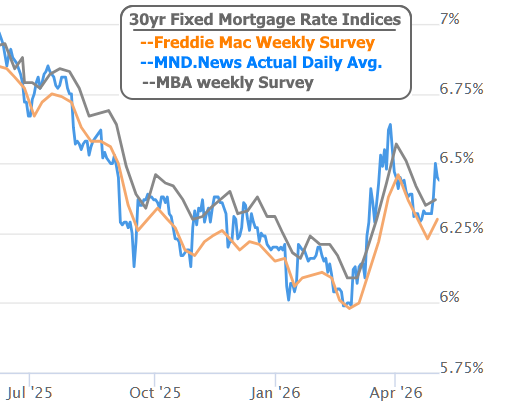
Mortgage rates moved higher this week after a period of calm, as global developments pushed markets into a more volatile phase. While rates increased sharply midweek, they showed signs of stabilizing toward the end, suggesting that the market may be finding a short-term ceiling.
The shift highlights how quickly mortgage trends can change when economic and geopolitical factors come into play.
A Quiet Start Followed by Sharp Midweek Moves
At the beginning of the week, mortgage rates remained steady, continuing the narrow trading range seen in previous days. However, conditions changed quickly.
- Monday: Stable and unchanged
- Tuesday: Sharp increase in rates
- Wednesday: Continued upward pressure
- Thursday–Friday: Slight pullback
Most of the weekly movement occurred in just two days, showing how concentrated market reactions can be.
What Drove the Increase in Mortgage Rates
The primary driver behind this week’s rate movement was geopolitical tension involving United States and Iran.
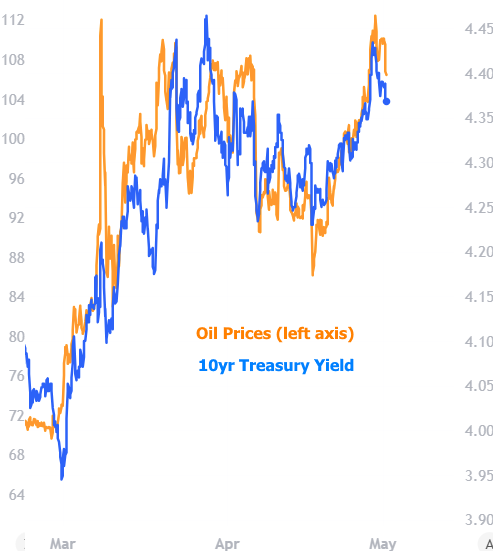
Reports early in the week suggested that peace negotiations were not progressing as expected. This uncertainty pushed oil prices higher, which in turn affected inflation expectations.
Later in the week, additional reports about potential disruptions in the Strait of Hormuz added more pressure. Since this region is critical for global oil supply, any risk to shipping routes tends to impact energy prices quickly.
Mortgage rates are closely linked to bond yields, which respond to inflation expectations. As oil prices rise, bond yields often increase—and mortgage rates follow.
Oil Prices and Mortgage Rates Connection
The relationship between oil prices and mortgage rates became clear again this week.
- Rising oil prices → Higher inflation expectations
- Higher inflation expectations → Rising bond yields
- Rising bond yields → Higher mortgage rates
This chain reaction explains why global events, even those far from the housing market, can directly affect home loan costs.
Rates Ease Slightly Toward the End of the Week
By the end of the week, there were signs of improvement in diplomatic discussions. This led to a modest drop in oil prices and bond yields.
As a result:
- Mortgage rates edged slightly lower
- Market volatility decreased
- Investors became more cautious
However, rates did not fully reverse earlier gains, indicating that uncertainty is still present.
Federal Reserve Meeting Adds Context
This week also included a policy update from the Federal Reserve.
As expected, the Fed did not change interest rates. Instead, markets focused on:
- Policy language in the official statement
- Differences in opinions among Fed members
- Comments from Jerome Powell
Some policymakers signaled concern that rates could move in either direction depending on inflation trends. This added slight upward pressure on bond yields, although most of the market movement had already been driven by geopolitical events.
Leadership Changes at the Fed
Another notable development is the upcoming leadership transition at the Federal Reserve.
Jerome Powell confirmed that he plans to remain on the board even after Kevin Warsh takes over as chair.
This is a rare move and could provide continuity in policy decisions during a period of uncertainty.
No Jobs Report This Week
Typically, the first Friday of the month includes the release of the U.S. jobs report, a key indicator for financial markets. However, this report was delayed.
The delay is due to calendar timing, which sometimes gives the Bureau of Labor Statistics less time to compile the data.
The report is now expected next week and could play a larger role in shaping market direction.
What to Watch Next Week
Looking ahead, several factors could influence mortgage rates:
- The delayed jobs report
- Additional economic data releases
- Updates on geopolitical tensions
- Comments from Federal Reserve officials
While economic data remains important, recent trends show that global events are having a stronger impact on market movements.
Key Takeaways
- Mortgage rates rose sharply midweek
- Geopolitical tensions were the main driver
- Oil prices and bond yields pushed rates higher
- Rates stabilized slightly toward the end of the week
- The Fed held rates steady but signaled uncertainty
Final Outlook
Mortgage rates are currently moving within a range, but volatility has returned. While the market may have found a short-term ceiling, future movements will depend heavily on global developments and inflation trends.
For borrowers, this means staying alert. Rates may not move in a straight line, and sudden changes can happen quickly based on new information.
As the next round of economic data arrives and geopolitical conditions evolve, mortgage rates are likely to remain sensitive to both domestic and global signals. For direct financing consultations or mortgage options for you visit 👉 Nadlan Capital Group.



























Responses