
New Construction Home Savings 2026: Lower Utility and Repair Costs Offset Higher Prices

New Homes May Cost Less Over Time
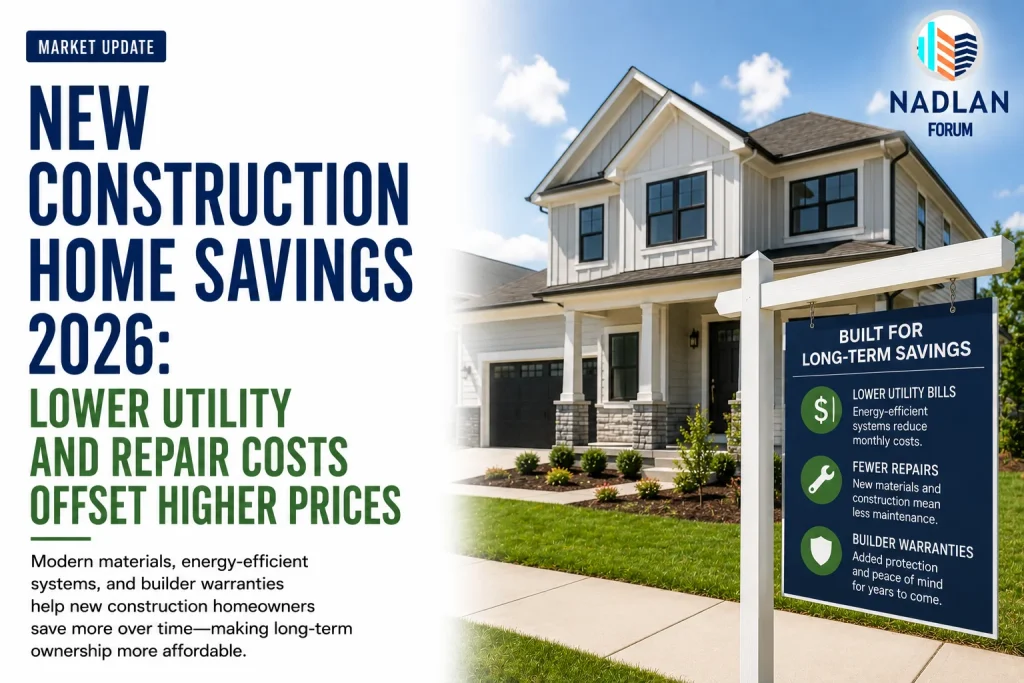
While newly built homes often come with higher listing prices, new research suggests they may actually save buyers significant money over the long term.
According to a recent study from Realtor.com, buyers of newly constructed homes save an average of more than $25,000 during the first 10 years of ownership compared to buyers of older homes.
The savings mainly come from:
- Lower energy costs
- Fewer major repairs
- Newer home systems
- Improved construction efficiency
Lower Operating Costs Drive Savings
The study found that ongoing ownership expenses are where newer homes provide the biggest financial advantage.
Many buyers focus primarily on the purchase price when comparing homes, but the total cost of ownership can vary significantly over time.
New homes typically require fewer expensive repairs during the first decade because major systems such as:
- HVAC units
- Roofs
- Water heaters
- Electrical systems
- Plumbing infrastructure
are brand new and less likely to need replacement.
Energy Efficiency Makes a Major Difference
Energy savings were another major factor highlighted in the research.
Modern building standards, insulation, windows, and HVAC technology have improved significantly over the past two decades.
As a result, newer homes often consume less electricity and heating fuel than older properties.
These savings become especially important as utility costs continue rising across the United States.
Geographic Differences Are Significant
The financial advantage of new construction varies widely depending on location.
New England Shows Largest Savings
New England states showed some of the strongest long-term savings from newly built homes.
Massachusetts ranked highest, with estimated 10-year savings approaching $39,000.
Analysts say colder winters and stricter building codes increase the efficiency advantage of newer homes in northern states.
Southern States Show Smaller Savings
Meanwhile, many Southern states showed smaller ownership savings.
Although the South remains one of the country’s most active new construction markets, milder climates and less aggressive energy regulations reduce the gap between older and newer homes.
New Construction Helps Offset Higher Purchase Prices
In several metro areas, the projected long-term savings from new homes were large enough to fully offset the higher upfront purchase cost compared to resale homes.
That means some buyers may effectively recover the initial price premium through lower operating and maintenance expenses over time.
The report identified multiple housing markets where ownership savings completely erased the pricing difference between new and existing homes over a 10-year period.
Five Key Performance Areas Matter
The research used housing performance data from Pearl Certification, a company that evaluates home efficiency and performance.
The analysis focused on five major categories:
- Safety
- Comfort
- Operations
- Resilience
- Energy efficiency
These areas collectively influence long-term ownership expenses and overall home performance.
Buyers Increasingly Looking Beyond Listing Prices
As affordability pressures continue across the housing market, buyers are beginning to pay closer attention to long-term ownership costs rather than just monthly mortgage payments.
Factors such as:
- Utility bills
- Insurance costs
- Maintenance expenses
- Repair frequency
- Energy efficiency
are becoming more important in purchasing decisions.
This shift is especially noticeable among younger buyers and first-time homeowners trying to manage rising living costs.
Builders Continue Promoting Efficiency Features
Homebuilders have increasingly emphasized energy-efficient construction as a selling point in recent years.
Many new homes now include:
- Smart thermostats
- Improved insulation
- High-efficiency HVAC systems
- Better windows and roofing materials
- Energy-saving appliances
These features help reduce monthly operating costs while improving comfort and sustainability.
Existing Homes Still Offer Advantages
Despite the long-term savings associated with new construction, resale homes continue offering advantages in many markets.
Older homes may provide:
- Lower purchase prices
- Larger lot sizes
- More established neighborhoods
- Better central locations
- Mature landscaping and infrastructure
For some buyers, those benefits may outweigh the operational savings offered by new construction.
Housing Affordability Remains the Main Challenge
Even with potential long-term savings, affordability remains a major issue for many households.
Higher mortgage rates and elevated home prices continue limiting access to both new and existing homes across much of the country.
Builders also continue facing challenges tied to:
- Labor shortages
- Rising material costs
- Land prices
- Financing costs
which can keep new construction prices elevated.
Technology Improving Homeownership Planning
The report also highlighted new tools helping buyers better understand long-term ownership costs.
Interactive cost-of-ownership platforms now allow shoppers to estimate future expenses tied to:
- Utilities
- Repairs
- System replacement costs
- Maintenance needs
before purchasing a property.
This may help buyers make more informed financial decisions when comparing homes.
Final Thoughts
New construction homes in 2026 continue carrying higher upfront prices, but lower utility bills and reduced repair costs may help offset those expenses over time.
As buyers increasingly focus on total ownership costs rather than just listing prices, energy-efficient new homes could become even more attractive in today’s housing market. For direct financing consultations or mortgage options for you visit 👉 Nadlan Capital Group.




















Responses