
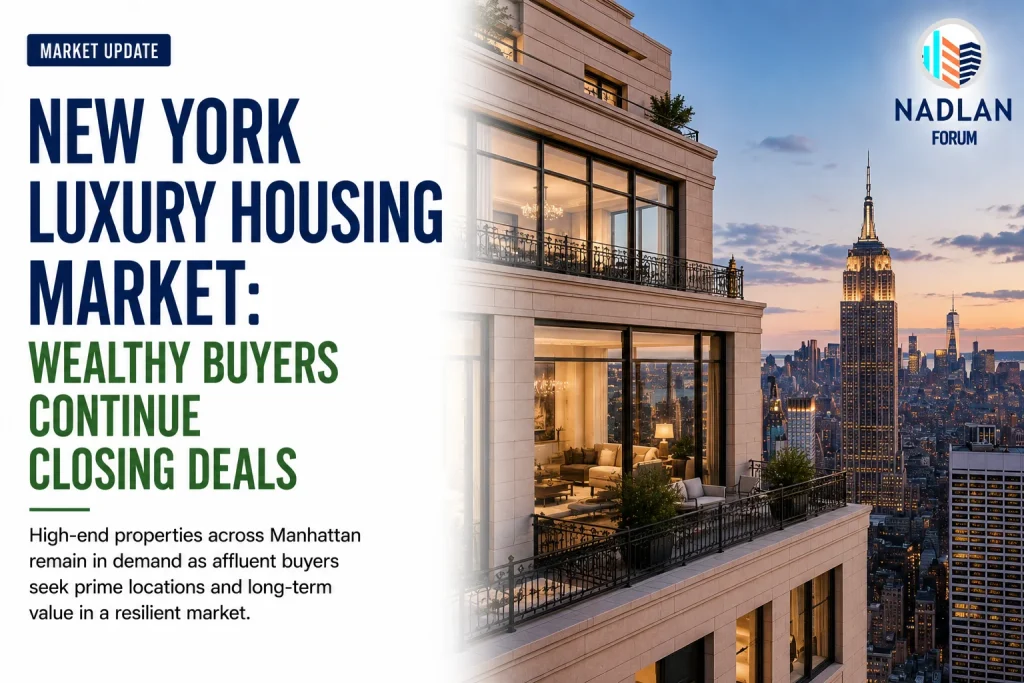
New York Luxury Housing Market: Wealthy Buyers Continue Closing Deals

Luxury Home Sales Continue Moving Higher
The luxury housing market in Manhattan continues to show strong demand despite growing political debate surrounding a proposed tax targeting wealthy second-home owners.
Recent market data shows that contracts for high-end apartments increased over the past month, even as concerns about higher taxes and possible wealth migration continue to dominate headlines.
According to data from Olshan Realty, 133 contracts were signed for Manhattan apartments priced at $4 million or more between mid-April and early May. That was slightly higher than the same period last year.
The total dollar volume of those contracts also increased by approximately 10%, reaching more than $1.1 billion.
Ultra-Luxury Market Remains Especially Strong
The strongest activity came from the ultra-luxury segment.
Contracts for apartments priced above $10 million surged roughly 80% year over year, reaching 34 signed deals during the reporting period.
This suggests that wealthy buyers remain active in the market despite uncertainty surrounding future tax policy.
Industry analysts say high-net-worth buyers often focus more on long-term asset value, location, and limited inventory than short-term political developments.
Proposed Pied-à-Terre Tax Sparks Debate
The recent attention surrounding the market comes after Zohran Mamdani and Kathy Hochul supported a proposed pied-à-terre tax earlier this year.
The proposal would place an annual tax on non-primary residences in New York valued at $5 million or more.
Supporters argue the measure could generate hundreds of millions of dollars in annual revenue while requiring wealthy part-time residents to contribute more to the city.
Critics, however, believe the tax could damage the luxury housing market and encourage wealthy residents to move investments elsewhere.
Brokers Warn About Possible Wealth Migration
Several real estate industry leaders have expressed concerns that the proposed tax may eventually reduce luxury market activity.
Some brokers say buyers in the $30 million to $40 million range have already started delaying purchasing decisions while waiting to see whether the proposal becomes law.
Industry groups argue that wealthy second-home owners already contribute significant property tax revenue while using relatively few public services.
There are also concerns that reduced luxury transactions could impact construction, brokerage, hospitality, and other industries connected to high-end real estate spending.
Miami Continues Competing for Wealthy Buyers
The debate has also renewed attention on the growing competition between New York and Miami for wealthy residents and businesses.
Ken Griffin, one of the most well-known billionaires connected to both cities, has continued expanding operations in Miami while maintaining major real estate investments in New York.
Griffin previously purchased a Manhattan apartment for approximately $238 million, setting a record for the most expensive home sale in U.S. history at the time.
His company, Citadel, is also developing major office projects in both New York and Miami.
New York Luxury Market Shows Resilience
Despite ongoing political and tax discussions, Manhattan’s luxury market continues benefiting from several factors:
- Limited supply of trophy properties
- Strong international demand
- Long-term investment appeal
- High concentration of wealth and financial services
Many buyers still view Manhattan real estate as a stable long-term asset, especially in prime neighborhoods with limited inventory.
Broader Housing Market Remains Different
While luxury sales remain strong, the broader New York housing market still faces affordability challenges tied to higher mortgage rates and elevated living costs.
The high-end market often behaves differently from the general housing market because many luxury buyers rely less on financing and are less sensitive to interest rate changes.
This helps explain why ultra-luxury sales can remain active even during slower periods for average homebuyers.
Political and Economic Uncertainty Still Matters
Although recent sales data remains strong, future market activity could still be influenced by:
- Tax policy changes
- Economic conditions
- Stock market performance
- Global wealth trends
Luxury real estate markets are often closely tied to financial markets and investor confidence.
Final Thoughts
The Manhattan luxury real estate market in 2026 continues to show resilience despite political debate over the proposed pied-à-terre tax.
While brokers warn that future taxes could eventually impact buyer behavior, recent contract activity suggests wealthy buyers are still actively purchasing high-end New York properties for now. For direct financing consultations or mortgage options for you visit 👉 Nadlan Capital Group.



















Responses