
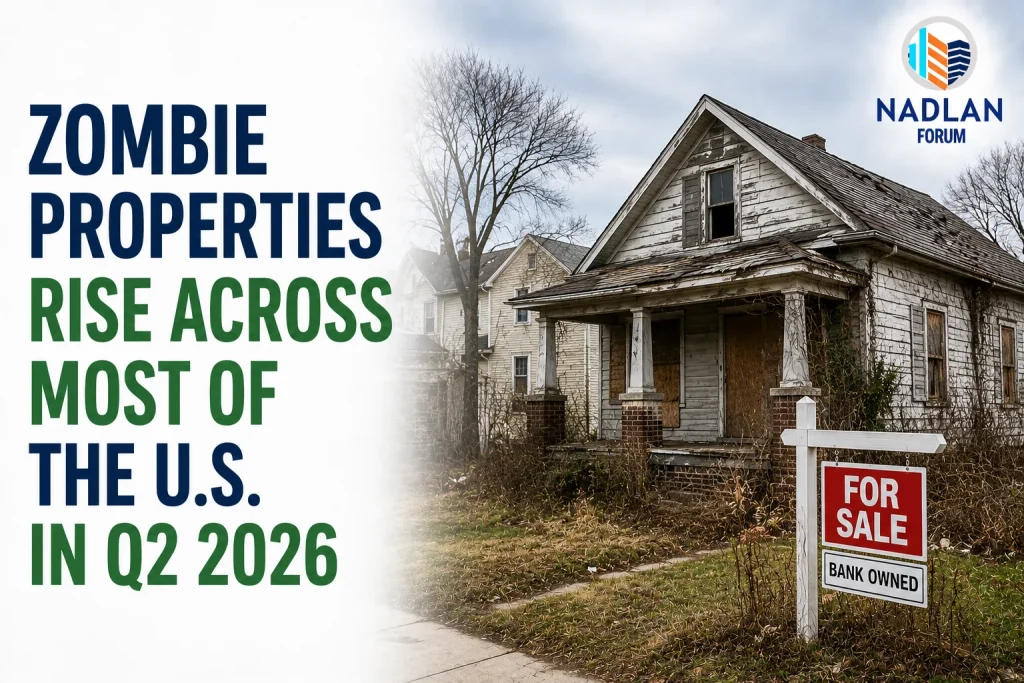
Zombie Properties Rise Across Most of the U.S. in Q2 2026


Zombie properties increased across much of the United States during the second quarter of 2026, signaling that foreclosure activity may be slowly returning to more normal levels after several years of unusual market conditions.
According to ATTOM’s latest Vacant Property and Zombie Foreclosure Report, roughly 1.4 million residential homes across the country currently sit vacant. That represents approximately 1.3% of all residential properties nationwide, remaining largely unchanged from both the previous quarter and the same period last year.
While the national vacancy rate stayed relatively stable, the number of so-called “zombie” homes moved slightly higher in many states.
What Are Zombie Properties?
Zombie properties are homes that enter the foreclosure process after owners stop making mortgage payments but abandon the property before foreclosure is completed.
These homes often remain vacant for extended periods, creating problems for neighborhoods, local governments, and surrounding homeowners.
Common issues tied to zombie properties include:
- Property neglect
- Falling neighborhood home values
- Safety concerns
- Vandalism and crime
- Increased maintenance costs for cities
Although zombie homes still represent a relatively small share of overall housing inventory, rising numbers are beginning to attract more attention across the real estate market.
Foreclosure Activity Continues Increasing
ATTOM reported that roughly 245,376 residential properties were in foreclosure during the second quarter of 2026.
Of those homes:
- 8,312 were classified as zombie properties
- Zombie homes represented 3.4% of all homes in foreclosure
- The zombie rate increased slightly from 3.3% in the prior quarter
Housing analysts say the increase may reflect a foreclosure market slowly normalizing after years of government assistance programs, foreclosure pauses, and historically low interest rates.
Most States Saw Zombie Property Growth
The number of zombie properties rose quarter over quarter in 38 states and Washington, D.C.
Among states with at least 100 zombie homes, the largest increases included:
- Georgia: up 98%
- North Carolina: up 67.2%
- Indiana: up 42%
- Iowa: up 35.5%
- South Carolina: up 15.4%
The sharp increase in some Southern and Midwestern states highlights how foreclosure pressure is spreading unevenly across regional housing markets.
Only a Few States Saw Declines
Only two states with at least 50 zombie properties posted declines during the quarter:
- New York: down 2.2%
- Washington: down 13.1%
Some analysts believe stronger housing demand and tighter inventory in certain markets may be helping prevent abandoned homes from building up in those states.
Vacancy Rates Remain Highest in Several Central States
Overall residential vacancy rates stayed elevated in some parts of the country.
States with the highest residential vacancy rates included:
- Oklahoma: 2.4%
- Kansas: 2.4%
- Alabama: 2.2%
- West Virginia: 2.1%
- Missouri: 2.1%
Higher vacancy levels are often tied to slower population growth, weaker local economies, aging housing stock, or reduced housing demand.
Northeast States Continue Showing Lowest Vacancy Levels
Meanwhile, several Northeastern states maintained the nation’s lowest vacancy rates.
States with the fewest vacant homes included:
- New Hampshire: 0.3%
- Vermont: 0.4%
- New Jersey: 0.5%
- Connecticut: 0.5%
- Idaho: 0.6%
Limited housing supply and stronger buyer demand continue supporting tighter inventory levels in many of these markets.
Investor-Owned Properties Show Higher Vacancy Risks
One of the more notable findings in the report involved investor-owned homes.
According to ATTOM, vacancy rates among investor-owned residential properties were significantly higher than the national average.
Out of approximately 25.1 million investor-owned homes nationwide:
- Roughly 890,135 sat vacant
- Vacancy rates reached 3.5% among investor-owned properties
That vacancy rate is more than double the overall national residential vacancy rate.
States With Highest Investor Property Vacancies
The states with the highest investor-owned property vacancy rates included:
- Indiana: 7.1%
- Illinois: 6.2%
- Kansas: 6%
- Oklahoma: 6%
- Alabama: 6%
Higher investor vacancies may reflect weaker rental demand, oversupply in some markets, or financial pressure on property owners facing higher financing and maintenance costs.
Lowest Investor Vacancy Rates Found in Smaller Markets
Several states reported much lower investor-owned property vacancy levels:
- New Hampshire: 0.9%
- Vermont: 1%
- Idaho: 1.3%
- North Dakota: 1.5%
- New Jersey: 1.6%
These lower vacancy levels suggest tighter housing markets and stronger occupancy demand.
Rising Mortgage Costs May Be Adding Pressure
Housing economists say elevated mortgage rates and higher living costs may be contributing to rising foreclosure activity in certain regions.
Over the past two years, many homeowners have faced:
- Higher borrowing costs
- Increased insurance premiums
- Rising property taxes
- Higher utility expenses
- Slowing affordability
While foreclosure levels remain far below the peaks seen during the 2008 housing crisis, financial pressure has increased for some households.
Housing Market Conditions Still Differ by Region
The latest zombie foreclosure data also highlights how uneven today’s housing market remains.
Some areas continue seeing:
- Strong buyer demand
- Tight inventory
- Rising prices
- Low vacancy rates
Meanwhile, other regions are dealing with:
- Slower home sales
- Higher vacancies
- Investor pullbacks
- More distressed properties
This regional divide continues shaping housing conditions across the country.
Zombie Foreclosures Still Represent a Small Share of Housing
Despite the increase, zombie properties still account for only a small percentage of the overall U.S. housing market.
Most homes entering foreclosure are not abandoned, and overall vacancy rates remain relatively low compared to historical housing downturns.
Still, housing analysts say the rise in zombie properties is worth monitoring closely as higher interest rates and affordability pressures continue impacting both homeowners and investors in 2026.




















Responses