
Rising Home Insurance Costs: Adding More Pressure to Homeownership

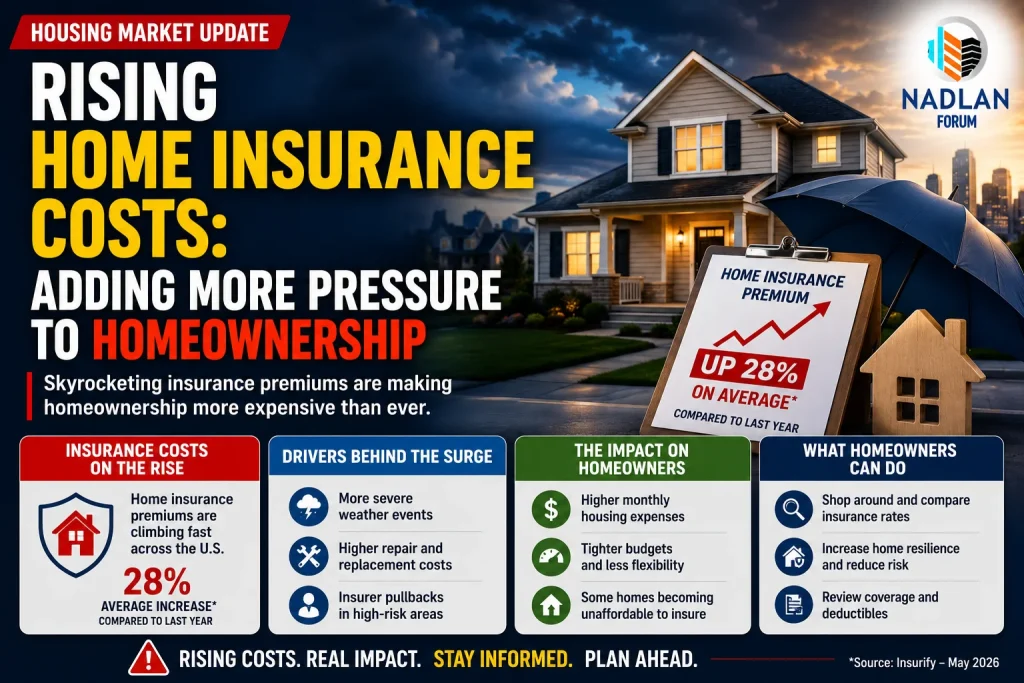
For many Americans, owning a home is becoming more expensive for reasons beyond mortgage payments and property taxes. Home insurance premiums have climbed sharply over the past several years, creating another financial challenge for homeowners across the country.
A recent housing and insurance study found that average home insurance rates increased by nearly 47% nationwide between 2020 and 2025. Every state experienced higher costs, although some regions saw much larger increases than others due to weather risks, construction costs, and inflation.
Home Insurance Costs Have Risen Quickly
The increase in insurance premiums did not happen overnight. Annual rate growth accelerated over the past several years as insurers dealt with rising claim costs and more frequent natural disasters.
Nationwide home insurance rate increases:
| Year | Average Increase |
|---|---|
| 2020 | 2.0% |
| 2021 | 2.8% |
| 2022 | 5.2% |
| 2023 | Continued growth |
| 2024 | 12.7% |
| 2025 | 6.0% |
| Total (2020-2025) | 46.8% |
Although the pace slowed slightly during 2025, premiums continue to move higher, making insurance a growing part of the total cost of owning a home.
Severe Weather Is Driving Costs Higher
Insurance companies have faced a significant increase in claims related to natural disasters.
The United States has experienced more billion-dollar weather events than in previous years, including severe storms, hail, wildfires, hurricanes, flooding, and strong winds.
These disasters often damage thousands of homes at once, creating massive repair bills for insurers.
At the same time, rebuilding homes has become more expensive due to higher prices for:
- Lumber.
- Roofing materials.
- Concrete and steel.
- Electrical supplies.
- Labor costs.
- Home repair services.
Supply chain problems following the pandemic also contributed to higher rebuilding expenses, forcing insurance companies to raise premiums.
States with the Biggest Insurance Increases
Some states have experienced much larger premium increases than the national average because of their exposure to natural disasters.
Largest cumulative increases between 2020 and 2025
| Rank | State | Increase |
| 1 | Colorado | 100.8% |
| 2 | Iowa | 96.0% |
| 3 | Minnesota | 88.2% |
| 4 | Utah | 77.2% |
| 5 | Nebraska | 72.2% |
Colorado remains one of the highest-risk states due to wildfire exposure, hailstorms, and severe weather activity.
Iowa and Minnesota have also seen major increases because of frequent hail and wind-related insurance claims.
States with the Smallest Premium Growth
Not every state experienced dramatic increases.
Areas with fewer weather-related insurance losses generally saw more moderate premium growth.
| Rank | State | Increase |
| 1 | West Virginia | 19.2% |
| 2 | Vermont | 19.6% |
| 3 | Maine | 20.0% |
Lower exposure to hail, wildfires, and severe storm damage has helped keep insurance costs more stable in these states.
2025’s Biggest Insurance Rate Increases
Even though overall growth slowed in 2025, several states still posted double-digit increases.
| Rank | State | 2025 Increase |
| 1 | Colorado | 18.3% |
| 2 | Minnesota | 17.0% |
| 3 | Iowa | 14.7% |
| 4 | Illinois | 14.1% |
| 5 | Delaware | 10.8% |
| 6 | Kentucky | 10.2% |
| 7 | Mississippi | 10.1% |
| 8 | South Carolina | 9.7% |
| 9 | Hawaii | 9.2% |
| 10 | Alaska | 8.8% |
Meanwhile, Florida, Texas, and Montana experienced relatively small annual increases during 2025.
Insurance Costs Vary Widely Across the Country
The average annual home insurance premium nationwide now stands at approximately $2,395.
However, homeowners in some states pay much more.
Most expensive states
| State | Average Annual Premium |
| Oklahoma | $5,298 |
| Nebraska | $4,956 |
| Colorado | $4,310 |
Least expensive states
| State | Average Annual Premium |
| Hawaii | $801 |
| Vermont | $924 |
| New Hampshire | $1,028 |
Many central states have some of the nation’s highest insurance costs because they regularly experience tornadoes, hailstorms, and severe weather events.
Several coastal and Northeastern states have premiums well below the national average.
Homeowners Are Making Difficult Choices
Higher insurance costs are beginning to affect homeowner behavior.
Many families are looking for ways to reduce monthly expenses by:
- Raising insurance deductibles.
- Shopping for new insurance providers.
- Reducing optional coverage.
- Combining insurance policies for discounts.
Some homeowners have even considered dropping insurance coverage entirely if it were not required by mortgage lenders.
Industry estimates suggest that more than 12 million American homes lacked insurance coverage during 2024, representing roughly 14% of residential properties.
This trend raises concerns about financial risks for both homeowners and local housing markets.
What This Means for Homebuyers
Insurance has become an increasingly important part of housing affordability.
When buyers calculate monthly housing costs, insurance premiums can significantly affect the total payment alongside mortgage principal, interest, taxes, and maintenance expenses.
In high-risk states, rising insurance costs may influence where buyers choose to live and invest.
Real estate investors are also paying closer attention to insurance expenses when evaluating rental properties and long-term returns.
Looking Ahead
Insurance experts expect premiums to continue rising, although perhaps at a slower pace than the record increases seen during 2023 and 2024.
Future costs will likely depend on several factors, including weather activity, hurricane seasons, wildfire conditions, inflation, and construction costs.
For homeowners, comparing policies regularly, improving home safety features, and preparing for weather-related risks may help manage future insurance expenses.
As housing affordability remains a major concern across the country, rising home insurance premiums have become another important cost that buyers and homeowners can no longer ignore. For direct financing consultations or mortgage options for you visit 👉 Nadlan Capital Group.





















Responses