
Labor Force Participation Drops: Why Fewer Americans Are Looking for Work

The latest U.S. employment report delivered mixed signals for the economy. While the unemployment rate edged down to 4.2%, a closer look at the data reveals a more concerning trend: fewer Americans are participating in the labor market.
Instead of reflecting stronger hiring, the lower unemployment rate was largely driven by a sharp decline in the number of people actively working or searching for work. The labor force participation rate dropped to its lowest level outside the pandemic period in nearly five decades, raising fresh concerns about the strength of the labor market.
For policymakers, businesses, and the housing industry, the report highlights that headline unemployment figures do not always tell the full story.
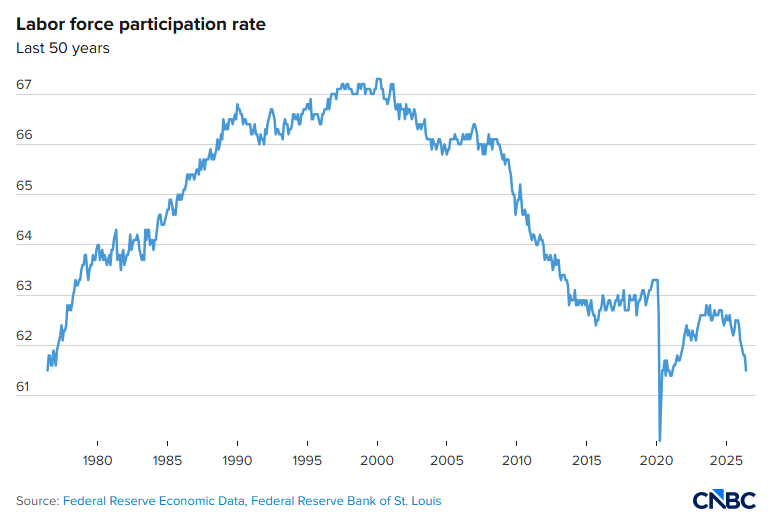
Labor Force Participation Falls to 61.5%
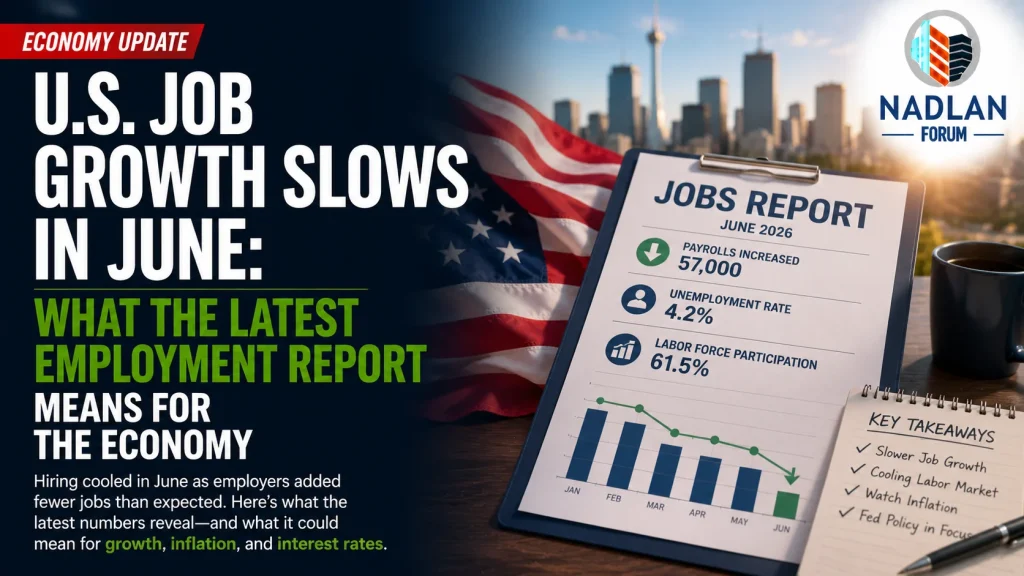
The labor force participation rate declined to 61.5% in June 2026.
This measure represents the percentage of working-age Americans who are either employed or actively looking for a job.
The latest reading marks:
- The lowest participation rate since March 2021
- The lowest level outside the pandemic period since June 1976
- Nearly 50 years of historically weak labor force participation
The decline suggests that many Americans are no longer actively seeking employment rather than successfully finding jobs.
Why the Unemployment Rate Fell
At first glance, the unemployment rate improving from 4.3% to 4.2% appears encouraging.
However, unemployment statistics only include individuals who are actively searching for work.
Once someone stops looking for employment, they are no longer counted as unemployed. Instead, they leave the labor force entirely.
As a result, unemployment can decline even when fewer people are actually working.
This dynamic explains why June’s lower unemployment rate does not necessarily indicate a stronger labor market.
More Than 700,000 Workers Left the Labor Force
One of the most striking figures in the report was the size of the workforce decline.
During June:
- Approximately 720,000 people left the labor force.
- The number of individuals not participating in the labor force increased by roughly 832,000.
- Household employment declined by approximately 507,000 workers.
These figures suggest many Americans either stopped searching for work or postponed entering the job market altogether.
The decline represents one of the largest monthly reductions in labor force participation in recent years.
Household Employment Also Declined
The employment report includes two major surveys.
The establishment survey measures payroll jobs reported by employers.
The household survey measures the number of people who are actually employed.
While payroll data showed employers added approximately 57,000 jobs during June, the household survey painted a weaker picture.
According to that survey, the number of employed Americans fell by roughly 507,000.
This difference illustrates why economists often examine multiple labor market indicators instead of relying solely on payroll growth.
Year-Over-Year Employment Trends
Longer-term employment data also points to a slowing labor market.
Compared with one year earlier:
- The labor force has declined by just over 1 million people.
- Total employment has fallen by approximately 1.06 million workers.
- The number of unemployed individuals increased by around 40,000.
Meanwhile, the employment-to-population ratio declined to 59%, its lowest level since October 2021.
Taken together, these figures indicate that workforce participation has weakened even though the official unemployment rate has changed very little.
Prime-Age Workers Also Left the Workforce
Historically, declining labor force participation has often been attributed to retiring Baby Boomers or demographic changes.
However, June’s report suggests another factor may now be contributing.
The largest decline occurred among prime-age workers, defined as adults between 25 and 54 years old.
Participation within this age group declined by 0.6 percentage points to 83.3%, the lowest level since December 2023.
Because these individuals are generally considered to be in their primary working years, the decline may indicate broader labor market weakness rather than simple demographic changes.
Why Are Fewer Americans Looking for Work?
Several factors may be contributing to lower labor force participation.
Possible explanations include:
- Early retirements
- Slower hiring across some industries
- Workers becoming discouraged after extended job searches
- Health-related issues
- Family caregiving responsibilities
- Immigration changes affecting labor supply
- Skills mismatches between employers and applicants
While no single factor fully explains the latest decline, economists generally agree the trend deserves close attention.
Leisure and Hospitality Showed Unexpected Weakness
Employment data also revealed softness in several industries.
Leisure and hospitality experienced an unexpected decline in employment during June.
Some economists believe this may reflect temporary seasonal factors or normal statistical volatility.
Others caution that weaker hiring in consumer-facing industries could signal slowing economic activity if the trend continues.
Future employment reports will help determine whether June represents a temporary fluctuation or the beginning of a broader slowdown.
Why Labor Force Participation Matters More Than Unemployment
Many economists consider labor force participation one of the most important measures of labor market health.
A low unemployment rate can appear positive even if fewer Americans are actually working.
Labor force participation, by contrast, measures how many working-age adults remain engaged in the economy.
Higher participation generally reflects:
- Strong hiring opportunities
- Greater worker confidence
- Expanding economic activity
- Increased household income potential
Declining participation may indicate growing caution among workers or fewer attractive employment opportunities.
What This Means for the Federal Reserve
The latest employment data may influence future monetary policy discussions.
A slowing labor market could reduce pressure on the Federal Reserve to raise interest rates further.
If hiring continues weakening while inflation gradually moderates, policymakers may become more comfortable maintaining current interest rates or eventually considering future rate reductions.
However, inflation remains above the Federal Reserve’s long-term target, meaning policymakers will continue balancing employment conditions against price stability.
Future inflation reports and additional labor market data will remain critical for upcoming policy decisions.
Impact on the Housing Market
Employment remains one of the most important drivers of housing demand.
A healthy labor market supports:
- Consumer confidence
- Mortgage qualification
- Household formation
- Home purchases
- Residential construction
If workforce participation continues declining, housing demand could soften in some markets as fewer households feel financially prepared to purchase homes.
On the other hand, weaker labor market conditions could eventually contribute to lower mortgage rates if investors expect the Federal Reserve to adopt a less restrictive monetary policy.
The relationship between employment, interest rates, and housing demand will remain an important trend to watch during the second half of 2026.
Looking Ahead
June’s employment report highlights why looking beyond the headline unemployment rate is essential when evaluating the economy.
Although unemployment declined slightly, the drop was largely driven by fewer Americans participating in the workforce rather than stronger hiring. The sharp decline in labor force participation, especially among prime-age workers, raises important questions about the underlying strength of the labor market.
Over the coming months, economists will closely monitor whether this represents a temporary fluctuation or the beginning of a more sustained slowdown. Future employment reports, inflation data, and Federal Reserve decisions will play a major role in shaping the outlook for both the economy and the housing market during the remainder of 2026. For direct financing consultations or mortgage options for you visit 👉 Nadlan Capital Group.




















Responses