
September Jobs Report Set for Release as Shutdown Ends and Delayed Data Begins Returning

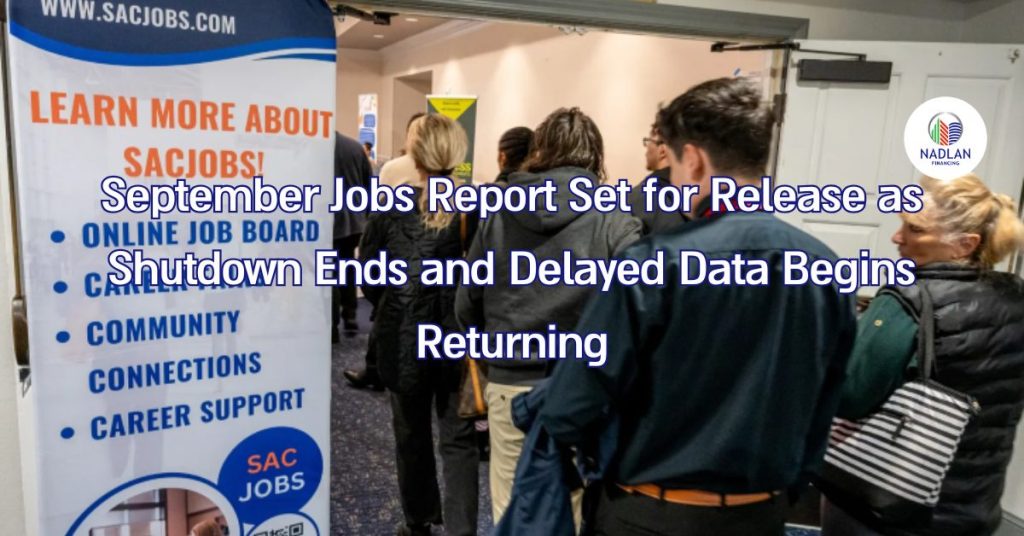
With the federal government reopening, investors and economists are now watching closely for the return of key economic data. The shutdown put major reports on hold for weeks, including employment figures, inflation readings, and several indicators that guide Federal Reserve policy. Now, the U.S. Bureau of Labor Statistics (BLS) says the first delayed release the September jobs report will be published Thursday at 8:30 a.m.
This will be the first major economic update since the shutdown halted normal operations. The long pause left financial markets, businesses, and the Fed working with limited information as they tried to understand where the economy stands.
What the First Data Release Will Include — and What It Won’t
The BLS confirmed that Thursday’s report will contain the September nonfarm payrolls number, showing how many jobs were added or lost during the month. But it will not include the unemployment rate.
That’s because the monthly jobs report comes from two separate surveys:
- A business survey that tracks payroll data
- A household survey that measures unemployment
The household survey requires phone calls and in-person interviews, both of which couldn’t be completed during the shutdown. Without those responses, officials can’t publish the unemployment rate.
A separate report on real earnings which shows how pay compares to inflation will be released the following day. This update normally comes out with the consumer price index (CPI), but the government did not release earnings numbers at the time due to missing payroll data.
How the Shutdown Complicated Data Collection
During the shutdown, the only major government report released was the September CPI, because it is used to calculate Social Security cost-of-living adjustments. Every other report was paused.
Because many surveys involve in-person visits, the BLS may not be able to reconstruct the missing October CPI data at all. Officials have warned that some monthly readings simply cannot be collected retroactively.
A statement on the BLS website asks for public patience, noting that “it may take time to fully assess the situation and finalize revised release dates.” The Bureau of Economic Analysis (BEA), which handles income, spending, and GDP data, gave a similar warning.
Investors, Fed Officials, and Lawmakers Grow Impatient
With no official numbers available for weeks, markets have been guessing about the true health of the U.S. economy. Bank of America economist Shruti Mishra called the recent period a “data fog,” saying both investors and the Federal Reserve were forced to rely on private-sector data and estimates.
Some Democratic lawmakers are now demanding answers. Senators Elizabeth Warren, Bernie Sanders, Maria Cantwell, and Gary Peters accused the administration of withholding information unnecessarily. In a letter obtained by CNBC, they argued the government “may be intentionally restricting the release of data,” adding that delays limit the ability of businesses and policymakers to make informed decisions.
They also cited the 2013 shutdown, when the BLS resumed data releases after publishing a clear revised schedule something they want to see again immediately.
When Will the Rest of the Data Return?
Several key indicators still have no official release date, including:
- October jobs report
- October CPI (which may never be compiled)
- Producer Price Index
- Import and export prices
- Job openings (JOLTS)
- Productivity data
The Commerce Department must also catch up on:
- Personal income and spending
- Retail sales
- Trade balance
- Durable goods orders
- The PCE index the Fed’s main inflation measure
- GDP updates
The October PCE reading is still scheduled for Nov. 26, though it’s unclear whether that date will hold.
Labor Secretary Lori Chavez-DeRemer said agencies must confirm accuracy before releasing data. Still, she expects updates “very quickly” and says the administration wants November’s numbers to be ready for public release.
What This Means for the Federal Reserve
Fed officials meet Dec. 9–10, and many economists expect they will need at least the September, October, and November jobs data before deciding whether to cut interest rates.
Citigroup economist Andrew Hollenhorst believes the Fed will receive all three payroll reports in time. However, several Fed officials have recently questioned whether another rate cut is needed, especially with mixed signals about employment and inflation.
Fed Chair Jerome Powell said last month that alternative data sources suggested the overall picture hadn’t changed much:
- Hiring is slowing
- Inflation is still above target
- Growth remains positive but cooling
A Busy, Uncertain Few Weeks Ahead
With the shutdown finally ending, agencies are racing to catch up. New schedules should be released soon, but questions remain about what can actually be recovered and how the missing data may affect the Fed’s next moves.
For now, the return of the September jobs report marks the first step back to normal, but a full recovery in government data may still take time. For direct financing consultations or mortgage options for you visit 👉 Nadlan Capital Group.





















Responses