
More Renters are Self-Reporting Payments as FHFA Policy Opens New Mortgage Opportunities


A new report from TransUnion, titled “Rent Payment Reporting eBook,” highlights a growing trend: more consumers are self-reporting their rent payments to credit agencies, with the percentage of renters whose payments are reported rising from 11% in 2024 to 13% in 2025. This development comes as a result of new policies by the Federal Housing Finance Agency (FHFA), which could potentially revolutionize how rent payment history impacts mortgage eligibility.
In July, FHFA Director Bill Pulte issued an order requiring Fannie Mae and Freddie Mac to accept VantageScore 4.0 credit scores for mortgage underwriting. This policy change enables renters’ payment histories to be included in the mortgage application process, a move that could unlock homeownership opportunities for first-time buyers who have consistently paid rent on time but may lack traditional credit histories.
“This change today makes mortgages permanent,” said Pulte in a statement following the policy announcement. By accepting VantageScore 4.0, the FHFA has introduced significant competition into the U.S. mortgage market, which has historically relied on FICO scores. Fannie Mae and Freddie Mac together account for the majority of mortgages in the country, making this a key step toward broadening access to homeownership.
According to Maitri Johnson, Senior Vice President of TransUnion’s Tenant and Employment Screening Business, “The vast majority of renters reliably make on-time payments, and they deserve to leverage that responsibility to access homeownership and other financial opportunities.”
Property Managers Face a Shift in Reporting Participation
While this policy shift benefits renters, there’s been a noticeable decline in the number of property managers participating in rent payment reporting. In 2025, only 44% of property managers reported rent payments, a slight decrease from 48% in 2024 and a significant drop from 27% in 2022. This suggests that consumers are increasingly self-reporting their rent payments through third-party data furnishers.
The drop in property manager participation is a concern because rent payment reporting is recognized as a key tool for improving credit scores, especially for renters who are working toward homeownership. Johnson noted, “We hope the new FHFA policy will help increase the number of consumers opting in for rent payment reporting.”
Despite the decrease in property managers’ participation, rent payment reporting remains a powerful incentive for tenants to pay on time. The report found that over half of renters (57%) are more likely to choose a property manager who reports payments to credit agencies, and nearly 80% of renters are more likely to make timely payments when they know their rent history is being reported.
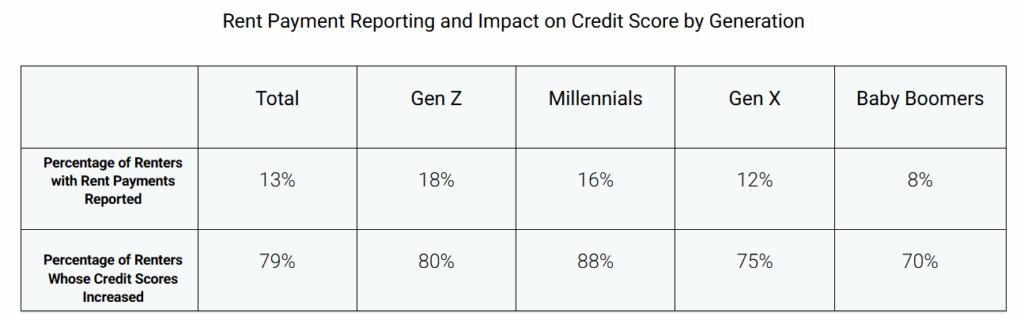
Generational Shifts in Rent Payment Reporting
The trend of self-reporting rent payments is particularly pronounced among younger generations. Gen Z, the most likely to have limited credit histories, had the highest participation rate at 18%, though this was a drop from 26% in 2024. This decline is surprising, as Gen Z stands to benefit most from the ability to use their rent payment history to boost their credit scores and increase their chances of securing mortgages.
According to TransUnion’s data, Millennials, Gen X, and Baby Boomers also showed increased participation in rent payment reporting. However, Gen Z’s decline in reporting could impact their future homeownership opportunities, given their relatively short credit histories. “It’s surprising to see Gen Z’s participation drop, considering their limited credit history,” Johnson explained. “Rent payment reporting could be the key to helping them qualify for mortgages and buy homes earlier than expected.”
Policy Shifts Drive Financial Inclusion
In addition to changes in reporting, recent regulatory actions have helped encourage rent payment reporting. For instance, California now mandates that property managers report rent payments, and Colorado has followed with similar requirements. These regulatory moves are designed to enhance financial inclusion by allowing renters to use their reliable payment histories to access better financial opportunities.
As the number of property managers who participate in rent reporting fluctuates, this policy shift is seen as a positive step for both renters and the broader housing market. With more renters self-reporting payments and credit agencies considering rent history for mortgage applications, there is hope that more people will be able to achieve homeownership, especially those who have long been excluded from the traditional credit system.
The Future of Rent Reporting
The increased participation in rent payment reporting signals a shift in the way renters are treated by the financial system. As more renters report their payments to credit agencies and as regulatory changes like the FHFA policy unfold, we may see a greater number of renters move toward homeownership, creating a new path to financial inclusion for those who have been historically underserved by traditional credit models.
In summary, while the number of property managers reporting rent payments has decreased slightly, the growing trend of self-reporting by renters is proving to be a promising development for those seeking to improve their credit scores and ultimately transition into homeownership. The new policies, especially the FHFA’s recent decision to accept VantageScore 4.0, are expected to expand mortgage eligibility, opening doors for many renters to finally buy their own homes. For direct financing consultations or mortgage options for you visit 👉 Nadlan Capital Group.

























Responses