
Home Prices Slow in 2026: Buyers Gain More Affordability as Housing Costs Ease


The U.S. housing market is showing signs of gradual improvement for buyers as home price growth slows and monthly housing costs become easier to manage compared with earlier expectations.
According to the updated 2026 housing forecast from Realtor.com, home prices are now expected to increase by only 1.2% during the year, below the expected inflation rate. This means that while home prices may still rise in dollar terms, they are effectively declining when adjusted for inflation.
The slowdown comes as high mortgage rates continue limiting affordability, but slower price growth, improving inventory, and stronger buyer negotiating power are creating a more balanced housing environment.
After several years of rapid price increases and limited supply, the market is beginning to shift toward conditions that provide more opportunities for buyers.
Home Price Growth Expected to Slow Further
The latest forecast shows a significant change compared with previous expectations.
Realtor.com originally projected stronger price growth for 2026, but updated conditions have changed the outlook.
Key housing forecasts for 2026 include:
- Home prices expected to increase 1.2% year over year
- Existing-home sales expected to reach approximately 4.10 million
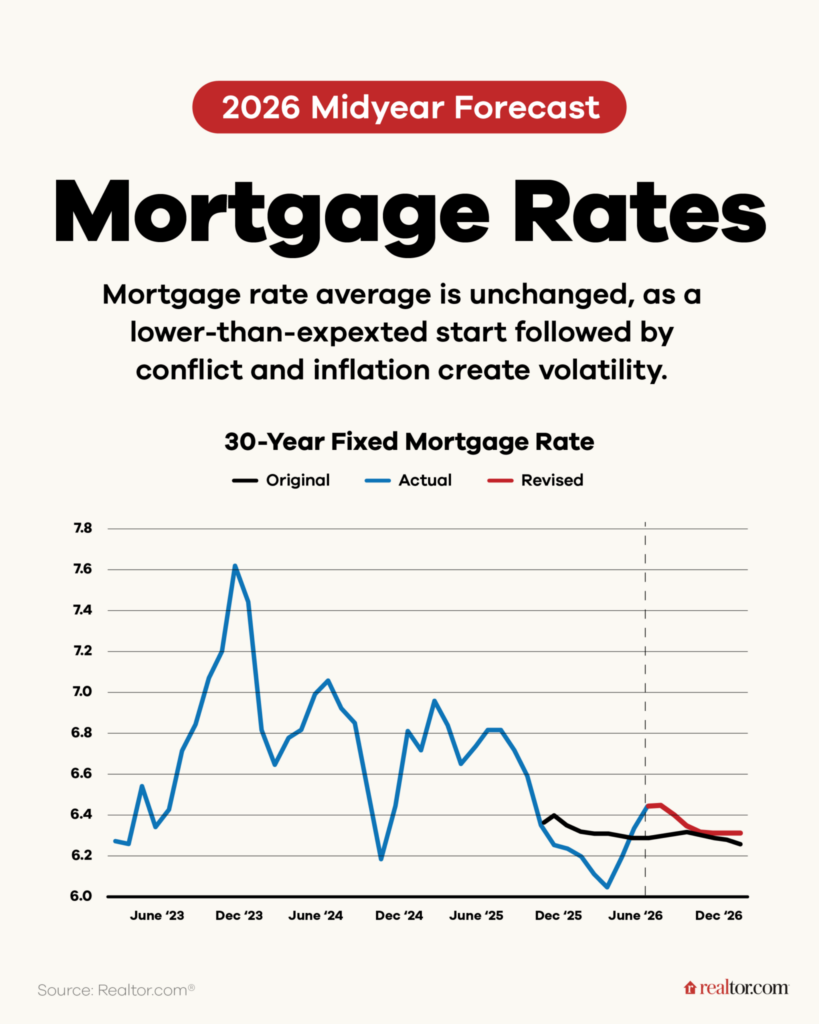
- Mortgage rates expected to average around 6.3%
- Monthly mortgage payments expected to decline about 1.9%
- Home inventory expected to increase 3.6%
- Rent prices expected to decline approximately 1.2%
The slower price growth reflects a market where sellers are adjusting expectations and buyers are becoming more selective.
Buyers Gain More Negotiating Power
For several years, buyers faced intense competition, limited inventory, and rapidly increasing home prices.
That environment is changing.
More sellers are now pricing homes closer to current market conditions instead of starting with unrealistic asking prices and reducing later.
This shift has helped create a more balanced market where buyers may have more opportunities to negotiate:
- Lower purchase prices
- Seller concessions
- Repair requests
- Better contract terms
The housing market is not moving toward a buyer’s market everywhere, but many areas are becoming less competitive compared with the pandemic-era housing boom.
Mortgage Rates Remain the Biggest Challenge
Although affordability is improving, mortgage rates continue to be a major factor influencing the housing market.
The 2026 forecast expects mortgage rates to remain around:
6.3% average for the year
Higher borrowing costs have prevented many potential buyers from entering the market, especially those who do not have significant savings or existing home equity.
Economic strength, inflation concerns, and Federal Reserve policy decisions continue influencing mortgage rates.
Even when rates briefly moved lower earlier in the year, economic uncertainty pushed borrowing costs higher again.
Inflation Changes the Real Cost of Housing
One important factor in the latest forecast is the difference between nominal and real home prices.
A home price increase of 1.2% may appear positive, but if inflation grows faster, the real value of those homes decreases.
This means housing is becoming less expensive relative to other goods and services.
For buyers, this could improve affordability because:
- Income growth may catch up with housing costs
- Monthly payments may take a smaller percentage of household income
- Price growth is becoming less aggressive
After years of housing costs increasing faster than wages, this represents a meaningful change.
Existing Home Sales Expected to Improve Slowly
Home sales activity is expected to recover gradually during the second half of 2026.
Realtor.com projects approximately:
4.10 million existing-home sales in 2026
That represents a modest increase from 2025 levels.
The recovery has been slower than originally expected because buyers remain sensitive to:
- Mortgage rates
- Home prices
- Economic uncertainty
- Monthly payment increases
However, improving inventory and more realistic seller expectations are helping bring buyers back into the market.
Inventory Continues to Improve
Housing inventory remains one of the most important factors affecting the market.
The updated forecast expects existing home inventory to increase approximately:
3.6% in 2026
More available homes can help reduce competition and give buyers more choices.
However, inventory remains below historical levels.
The U.S. housing market continues facing a long-term shortage estimated at several million homes, especially in areas where demand remains strong.
The largest opportunities for additional housing supply may exist in regions where shortages are most severe, including parts of the Northeast and Midwest.
Builders Adjust to Changing Market Conditions
New home construction is also responding to changing buyer behavior.
Builders previously relied heavily on incentives such as:
- Mortgage rate buydowns
- Price reductions
- Closing cost assistance
As market conditions stabilize, those incentives have become less effective.
Builders are now adjusting construction plans, especially in regions where supply has improved more quickly.
At the same time, areas with limited housing availability continue to face significant construction challenges.
Renters May See More Relief in 2026
The rental market is expected to continue improving for tenants.
Realtor.com forecasts that rents will decline approximately:
1.2% in 2026
A large pipeline of new apartment construction has increased rental supply, creating more competition among landlords.
This has resulted in:
- More available apartments
- Greater negotiating power for renters
- Increased rental concessions
Vacancy rates have also moved closer to historical averages, suggesting a healthier rental balance.
However, continued rental affordability will depend on whether new construction keeps pace with demand.
Housing Market Becoming More Balanced
The 2026 housing market is moving away from the extreme conditions seen in previous years.
Buyers are gaining more advantages as:
- Price growth slows
- Inventory improves
- Sellers become more realistic
- Rental pressure decreases
At the same time, high mortgage rates remain a major obstacle.
The market is not experiencing a major correction, but instead appears to be gradually moving toward a more balanced environment.
What Buyers Should Watch in the Second Half of 2026
Several factors will determine how the housing market develops:
Mortgage Rate Movement
Lower rates could bring more buyers back into the market, while higher rates may continue limiting affordability.
Housing Inventory
More listings could create additional opportunities and reduce competition.
Seller Pricing Strategy
Homes priced correctly are likely to attract more interest than overpriced listings.
Rental Supply
Continued apartment construction could determine whether renters continue receiving relief.
Final Outlook for the 2026 Housing Market
The latest forecast suggests that housing affordability is slowly improving, not because homes are becoming dramatically cheaper, but because price growth is slowing while incomes continue adjusting.
Home prices are expected to rise more slowly than inflation, monthly payments are projected to improve, and buyers are gaining more negotiating power.
While mortgage rates remain elevated, the market is showing signs of moving toward a healthier balance between buyers and sellers.
For many Americans waiting for better opportunities, 2026 may become a year where patience and careful planning create more favorable conditions in the housing market. For direct financing consultations or mortgage options for you visit 👉 Nadlan Capital Group.























Responses