
Inflation Rises to 3.3%: Energy Costs Push Prices Higher in March

Headline Inflation Moves Higher
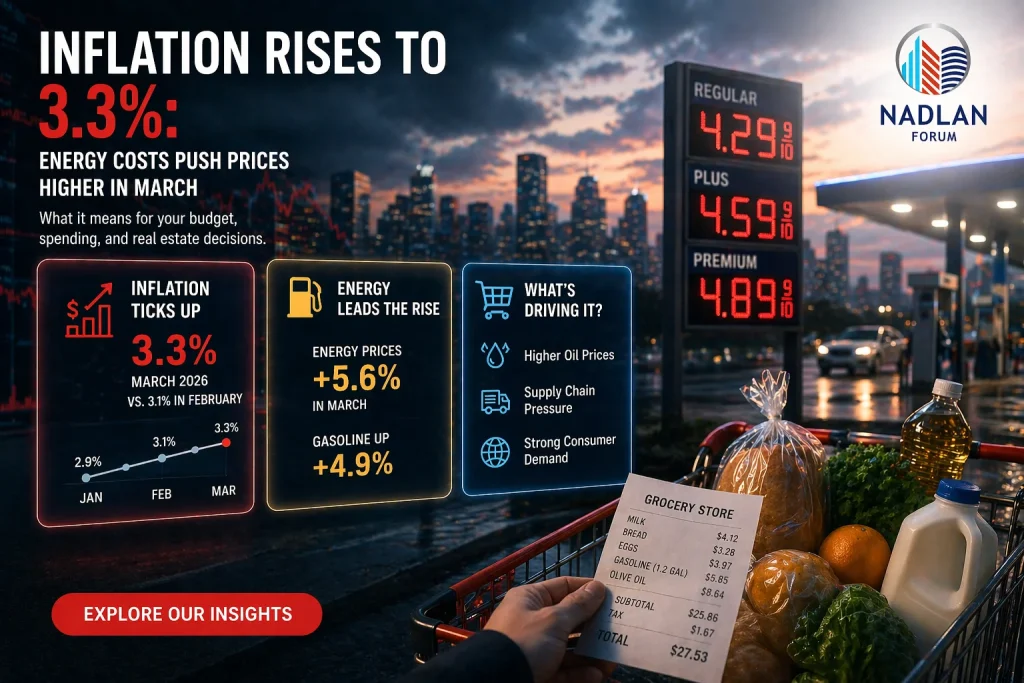
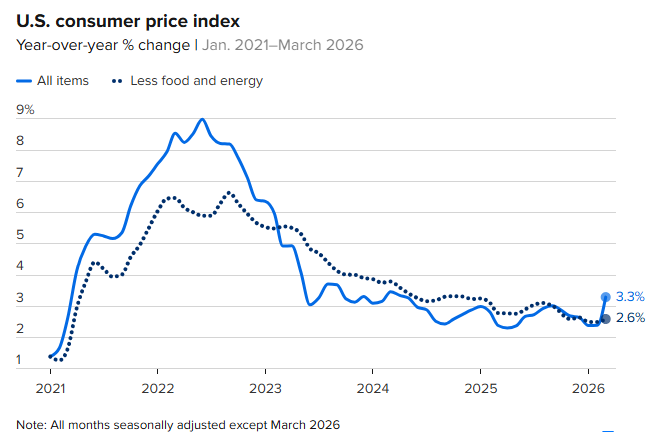
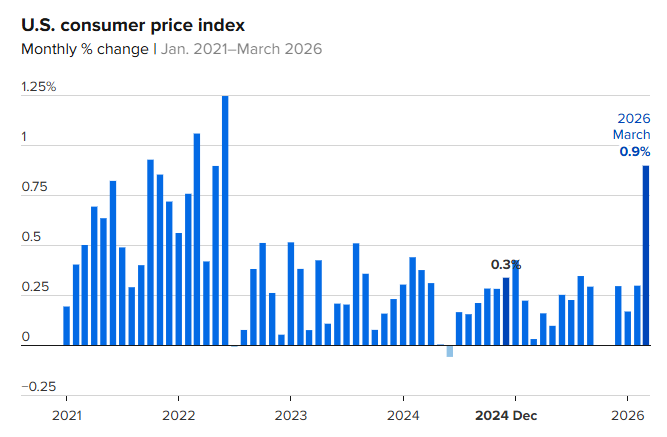
The latest inflation data shows that consumer prices increased noticeably in March 2026, largely driven by a surge in energy costs. According to the Bureau of Labor Statistics, the Consumer Price Index (CPI) rose 0.9% for the month, bringing the annual inflation rate to 3.3%.
This marks a clear jump from February’s reading and represents the highest annual inflation level since April 2024. The increase highlights how quickly external factors, such as global conflict and energy supply disruptions, can influence everyday prices.
Energy Prices Lead the Increase
The main driver behind March’s inflation spike was a sharp rise in energy costs. Overall energy prices surged by 10.9% during the month, with gasoline prices alone jumping more than 21%.
This single category accounted for a large portion of the total increase in consumer prices. Higher fuel costs tend to affect transportation, production, and delivery expenses, which can then spread across the broader economy.
However, there are early signs that energy prices have started to stabilize in April following easing geopolitical tensions. If this trend continues, it may help slow inflation in the coming months.
Core Inflation Remains More Stable
While headline inflation increased sharply, underlying inflation showed a more moderate trend.
Excluding food and energy, core inflation rose:
- 0.2% for the month
- 2.6% year-over-year
These figures came in slightly below expectations, suggesting that price pressures outside of energy remain relatively controlled.
Some categories even saw price declines, including:
- Medical care
- Personal care items
- Used vehicles
This indicates that the broader inflation trend is not accelerating across all sectors.
Mixed Trends Across Key Spending Areas
A closer look at the data shows different movements across major categories:
- Housing (shelter): up 0.3% monthly, 3% annually
- Food: unchanged monthly, up 2.7% annually
- Airfares: up 2.7%, reflecting higher fuel costs
- Apparel: increased slightly
Food prices at home actually declined slightly, with noticeable drops in items like eggs and meat. This helped offset some of the pressure from energy-related increases.
Impact on Household Finances
Rising prices are starting to affect real income. Even though wages increased slightly, they did not keep pace with inflation.
- Real earnings fell 0.6% in March
- Annual real wage growth remained modest
This means that, on average, consumers are losing some purchasing power, especially as essential costs like fuel rise.
What This Means for Interest Rates
The latest inflation report complicates the outlook for interest rates. While core inflation remains relatively stable, the overall increase keeps inflation above the central bank’s target.
The Federal Reserve is likely to remain cautious. Policymakers may choose to wait and see if the energy-driven spike is temporary before making any major decisions on rate cuts or increases.
Market expectations currently suggest limited chances of rate cuts in the near term, though the situation could change depending on future inflation data.
Outlook for the Months Ahead
Looking forward, inflation trends will depend heavily on:
- Energy price movements
- Global economic stability
- Consumer demand patterns
If energy costs continue to ease, inflation could gradually move lower. However, persistent uncertainty in global markets means risks remain.
Final Thoughts
The March inflation report shows how quickly prices can rise when energy costs spike. While core inflation remains under control, the overall increase highlights ongoing challenges for households and policymakers.
For consumers, the key takeaway is that inflation pressures are still present, even if they are uneven across different categories. For the broader economy, the path ahead will depend on whether recent price increases prove temporary or more sustained. For direct financing consultations or mortgage options for you visit 👉 Nadlan Capital Group.



















Responses