
June 08, 2026 Mortgage Rate Update: Purchase and Refinance Rates Nearly Identical

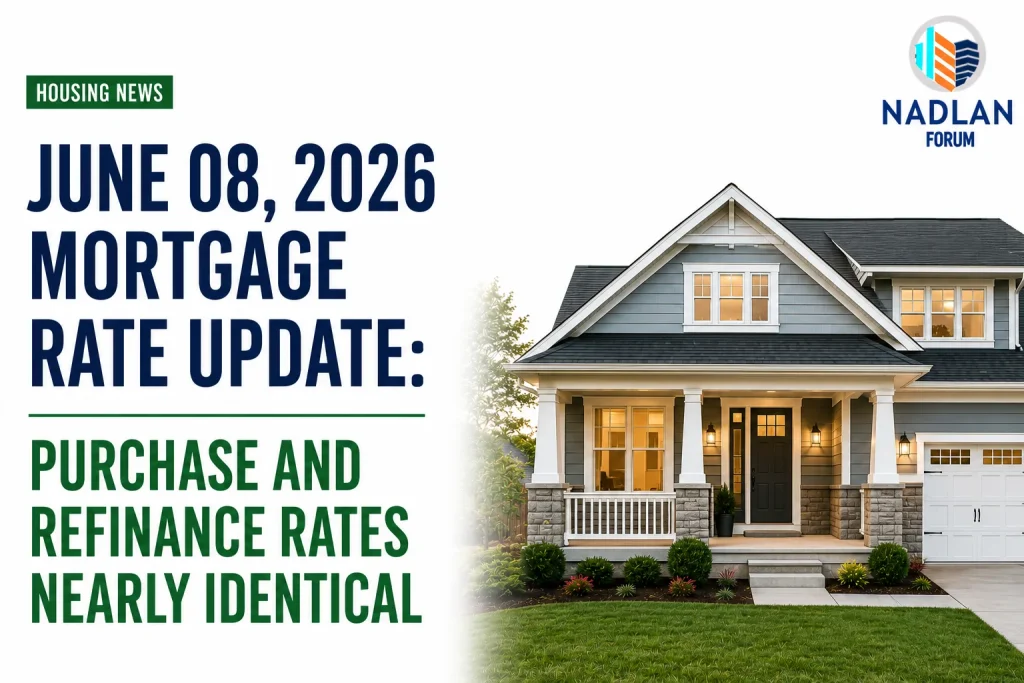
Mortgage rates remain one of the biggest factors influencing the housing market in 2026. While many buyers hoped borrowing costs would move significantly lower this year, rates continue to hover in the mid-6% range. Even so, the market has shown surprising resilience as both buyers and sellers adapt to the current environment.
One notable trend emerging in June is the small difference between purchase and refinance rates. Historically, refinance loans often carried slightly higher rates than purchase mortgages. Today, that gap has narrowed considerably, creating new opportunities for homeowners considering refinancing and buyers entering the market.
Current Mortgage Rates
According to the latest market averages, mortgage rates remain relatively stable compared to recent weeks.
Current average rates include:
- 30-year fixed mortgage: 6.38%
- 20-year fixed mortgage: 6.39%
- 15-year fixed mortgage: 5.74%
- 5/1 ARM: 6.32%
- 30-year VA loan: 5.81%
Refinancing rates are very similar:
- 30-year fixed refinance: 6.30%
- 20-year fixed refinance: 6.22%
- 15-year fixed refinance: 5.81%
- 5/1 ARM refinance: 6.38%
The close relationship between purchase and refinance pricing reflects a market that has become more balanced compared to previous years.
Why Mortgage Rates Are Staying Elevated
Several economic factors continue to keep mortgage rates above the levels many consumers became accustomed to during the pandemic.
Inflation Remains Above Target
Although inflation has slowed from its peak levels, it remains above the Federal Reserve’s long-term goal.
Recent inflation reports continue to show ongoing pressure in housing, energy, transportation, and services. As long as inflation remains elevated, interest rates are unlikely to return to the ultra-low levels seen in 2020 and 2021.
Strong Employment Data
Recent labor market reports have shown stronger-than-expected job growth.
A healthy labor market supports consumer spending and overall economic activity. While this is positive for the economy, it also reduces pressure on policymakers to lower interest rates quickly.
Strong employment numbers have recently pushed bond yields higher, which directly impacts mortgage rates.
Federal Reserve Policy
The Federal Reserve continues to take a cautious approach.
Many economists now expect interest rates to remain relatively stable for an extended period. Some market participants have even begun discussing the possibility of additional rate increases if inflation remains stubbornly high.
Because mortgage rates are heavily influenced by expectations surrounding future monetary policy, these concerns continue to support higher borrowing costs.
Homebuyers Are Adjusting to the New Market
While higher rates have reduced affordability, many buyers are no longer waiting for a dramatic drop in borrowing costs.
Instead, they are adjusting their expectations and focusing on opportunities available in today’s market.
Several housing reports released this spring have shown:
- More homes coming onto the market.
- Increased inventory in many regions.
- More realistic seller pricing.
- Growing pending home sales.
- Increased negotiating opportunities.
As a result, many buyers are finding that higher mortgage rates can be partially offset by better pricing and less competition than during the pandemic housing boom.
Purchase Rates vs Refinance Rates
One interesting development in 2026 is the narrowing difference between purchase and refinance loans.
Traditionally, lenders charged slightly higher rates on refinance transactions due to additional risk factors and market conditions.
Today, however, the spread between the two is extremely small.
For homeowners considering refinancing, this creates an opportunity to evaluate whether a refinance could help achieve specific goals such as:
- Consolidating debt.
- Changing loan terms.
- Removing mortgage insurance.
- Accessing home equity.
- Lowering monthly payments when possible.
Each situation is unique, and homeowners should carefully compare costs and potential savings before refinancing.
Fixed-Rate Mortgages Continue to Dominate
Despite continued discussion about adjustable-rate mortgages, most borrowers still prefer fixed-rate loans.
Benefits of Fixed Rates
Fixed-rate mortgages provide:
- Consistent monthly payments.
- Protection against future rate increases.
- Easier long-term budgeting.
Many borrowers value payment stability, especially during periods of economic uncertainty.
Adjustable-Rate Mortgages Remain an Option
Adjustable-rate mortgages can still make sense in certain situations.
Borrowers who expect to move within a few years may benefit from lower introductory rates. However, ARM rates have recently been very close to fixed rates, reducing some of their traditional appeal.
Before choosing an ARM, borrowers should carefully evaluate future rate adjustment risks.
Ways Borrowers Can Improve Their Mortgage Terms
Even in a higher-rate environment, borrowers have several ways to improve their financing options.
Strengthen Credit Scores
Higher credit scores generally lead to better mortgage pricing and lower fees.
Increase the Down Payment
A larger down payment reduces lender risk and can help borrowers secure more favorable loan terms.
Lower Existing Debt
Reducing outstanding debt improves debt-to-income ratios, which often helps borrowers qualify for better rates.
Compare Multiple Lenders
One of the most effective strategies remains shopping around.
Industry studies consistently show that borrowers who compare multiple mortgage offers often save thousands of dollars over the life of a loan.
Evaluate Discount Points
Some buyers choose to pay discount points at closing in exchange for a lower interest rate.
This strategy can make sense for borrowers planning to remain in their homes for many years.
What Could Happen Next?
Most housing economists expect mortgage rates to remain within a relatively narrow range for the rest of 2026.
Current forecasts generally place 30-year mortgage rates between 6.3% and 6.5% through year-end.
While significant declines are possible if inflation cools faster than expected, current economic data suggests rates may stay near current levels for the foreseeable future.
At the same time, improving housing inventory and more balanced market conditions could continue creating opportunities for buyers.
Bottom Line
Mortgage rates in June 2026 remain elevated compared to historical lows, but they have become more stable. Purchase and refinance rates are now remarkably similar, reflecting a housing market that is adjusting to a higher-rate environment.
Although affordability challenges remain, increased inventory, more realistic seller pricing, and improving market balance are helping buyers re-enter the market. For both homebuyers and homeowners, comparing lenders, improving financial profiles, and understanding available loan options remain the best ways to secure favorable financing in today’s market. For direct financing consultations or mortgage options for you visit 👉 Nadlan Capital Group.




















Responses