
Survey Shows Americans Support Zoning Flexibility and Starter Homes

A recent survey highlights that Americans strongly favor starter homes and greater flexibility in zoning and land use. These findings provide insight into public housing preferences and suggest a clear direction for local and federal housing policies.
Public Support for Starter Homes
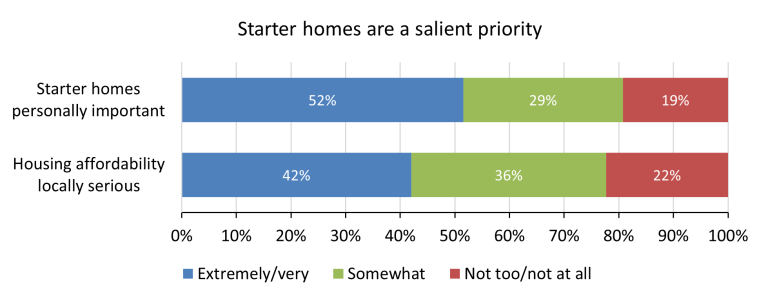
Among respondents, 52% said having more affordable starter homes in their community is extremely or very important, while 81% considered it at least somewhat important. Starter homes were seen as a key strategy for expanding ownership opportunities for first-time buyers and young families.
The survey also revealed that Americans prioritize:
- Affordable homeownership over rental-only options
- Smaller, low-rise residences integrated throughout neighborhoods
- Gradual implementation of new housing policies
- Development led by individual homeowners and small builders instead of large developers
In terms of preference, 57% of respondents favored more starter homes for ownership, compared to just 4.6% favoring smaller rental units. The remaining 38% preferred a combination, showing a strong tilt toward ownership-focused housing solutions.
Support for Zoning and Land-Use Flexibility
Respondents expressed robust support for flexible housing development:
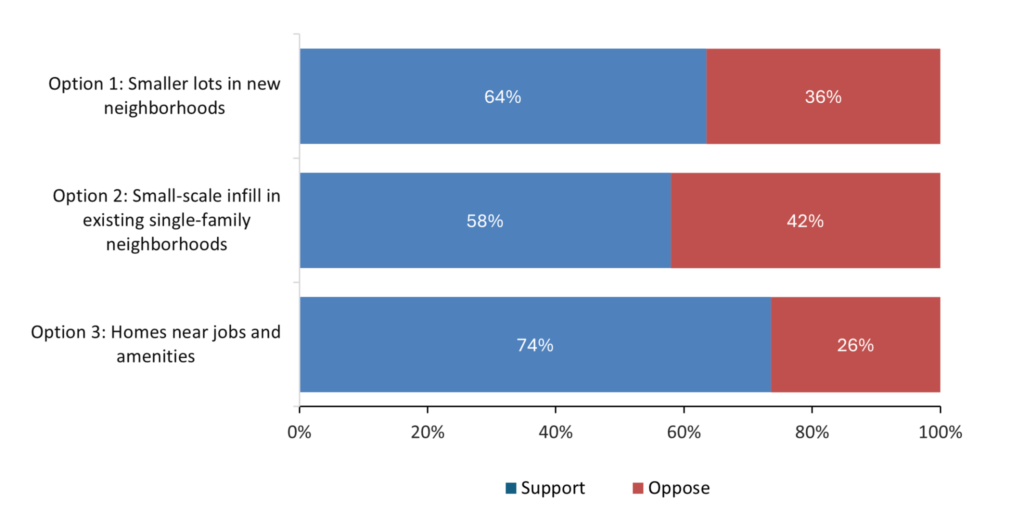
- 74% favor building homes near retail, dining, and employment centers
- 64% support developing new communities with smaller lot sizes
- 58% back introducing smaller-lot residences, duplexes, townhomes, and single-family homes within current single-family neighborhoods
The highest support was for housing near employment centers, connecting new construction to convenience, access to work, and better use of underutilized land.
Preference for Gradual and Practical Housing Solutions
Americans showed a strong preference for small-scale, ownership-focused housing policies:
- 77% want property owners to have greater flexibility in building various types of homes
- 78% prefer small, low-rise residences spread across neighborhoods rather than concentrated in large developments
- 83% prioritize smaller, accessible homes over larger constructions even if fewer units are added
- 85% support development led by homeowners or small builders instead of large firms
- 60% prefer gradual, incremental adjustments over rapid, large-scale policy changes
These preferences suggest the public favors reforms that are practical, community-focused, and gradual, rather than large-scale or rental-exclusive initiatives.
Implications for Housing Policy
The survey aligns with recent reform efforts like Texas SB 15, which broadens opportunities for starter homes by allowing smaller lots and more flexible land use. Policymakers can interpret these findings as a mandate to:
- Promote starter homes in both new and existing neighborhoods
- Provide flexibility for homeowners to build or subdivide lots responsibly
- Focus on ownership-driven housing rather than exclusively rental solutions
- Implement gradual changes to reduce costs and improve housing accessibility
By prioritizing starter homes and zoning flexibility, cities and states can increase affordable homeownership while maintaining neighborhood character and fostering local economic integration.
Summary: Americans support zoning and land-use reforms that enable starter homes, smaller lots, and locally integrated housing. Ownership-focused, gradual, and practical development strategies receive strong backing, providing a clear framework for future housing policy initiatives in 2026 and beyond. For direct financing consultations or mortgage options for you visit 👉 Nadlan Capital Group.























Responses